Sump Pump Service Before Naperville's Spring Storms
A checkup runs your pump on a full pit and tests the backup and check valve, so problems turn up in March instead of during a May storm.
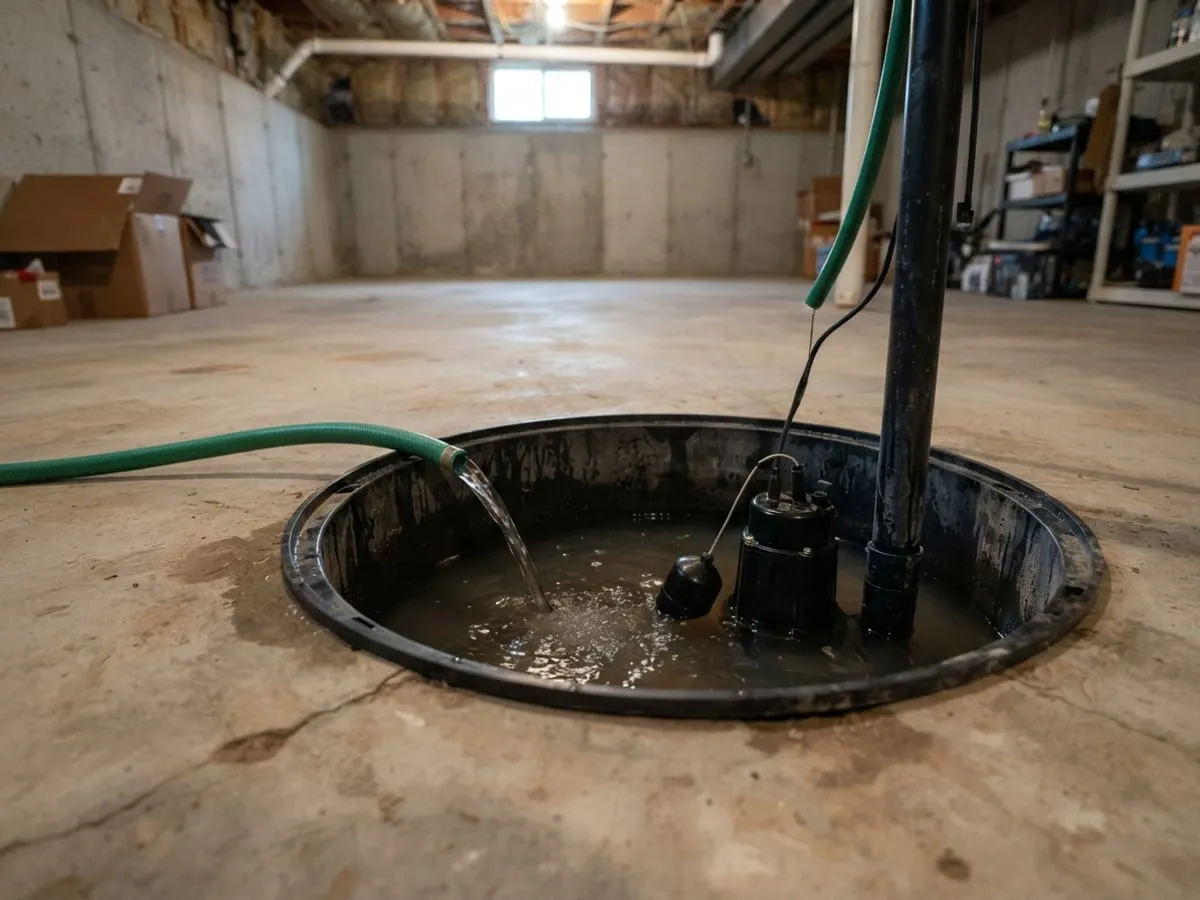
A pump that sat idle all winter, then gets the year's hardest work
From late fall into early spring, plenty of Naperville sump pumps barely run. Then May through July bring the heaviest rain of the year, with April close behind, and the same pump, float and check valve have to cycle for days at a time. Sump Pump Naperville books sump pump service visits so those parts get tested before the wet months. If you've never seen your pump run, or don't know how old it is, that's reason enough to book one.
The City of Naperville puts it plainly in its fact sheet on subsurface water: pumps, check valves and piping "are sometimes not used very much during normal conditions but can suddenly become heavily taxed during heavy rainfall or snowmelt and fail at those worst possible times." A checkup finds the stuck float or the leaking valve while the pit is quiet.
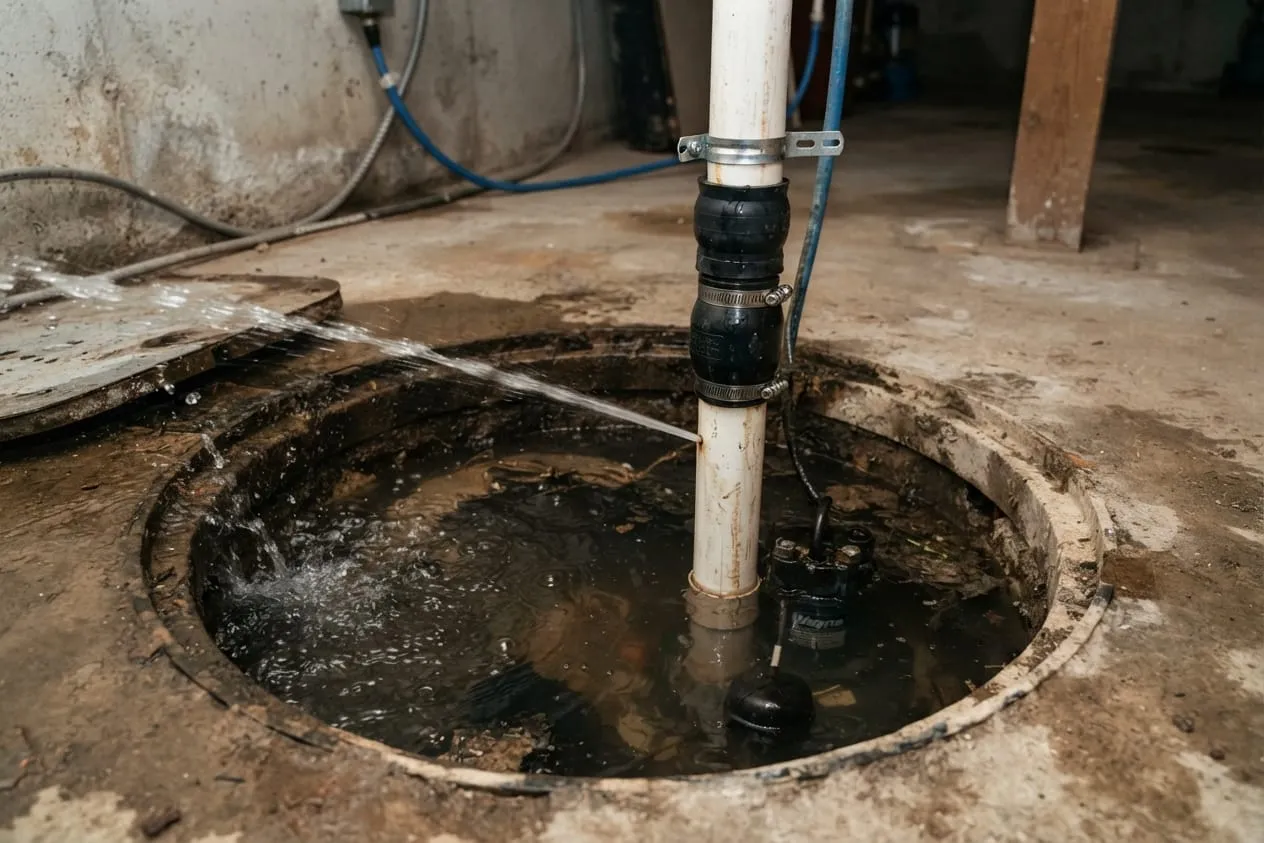
What gets tested on the checkup
Every part gets tested on real water. A plumber fills the pit with a hose, so nothing depends on waiting for rain.
| Part | How it's tested | Sign it needs work |
|---|---|---|
| Pump and float | Pit filled with a hose until the float lifts; the pump has to start, empty the pit and shut itself off | Slow start, hum, or a float that drags on the basin wall |
| Check valve | Watched as the pump stops: the riser should stay full | Water falling back into the pit, or a hard slam |
| Relief hole | Looked for on the discharge pipe inside the pit, below the check valve | Missing, or plugged with scale |
| Intake and pit floor | Silt, gravel and debris cleared from the screen and the bottom of the pit | Sludge or stones around the pump base |
| Power | GFCI outlet and circuit checked; cord and plug looked over | Shared outlet, extension cord, or a GFCI that trips |
| Discharge line | Followed from the rim joist to where it ends outside | Ends near the foundation, sags, or points at a sidewalk |
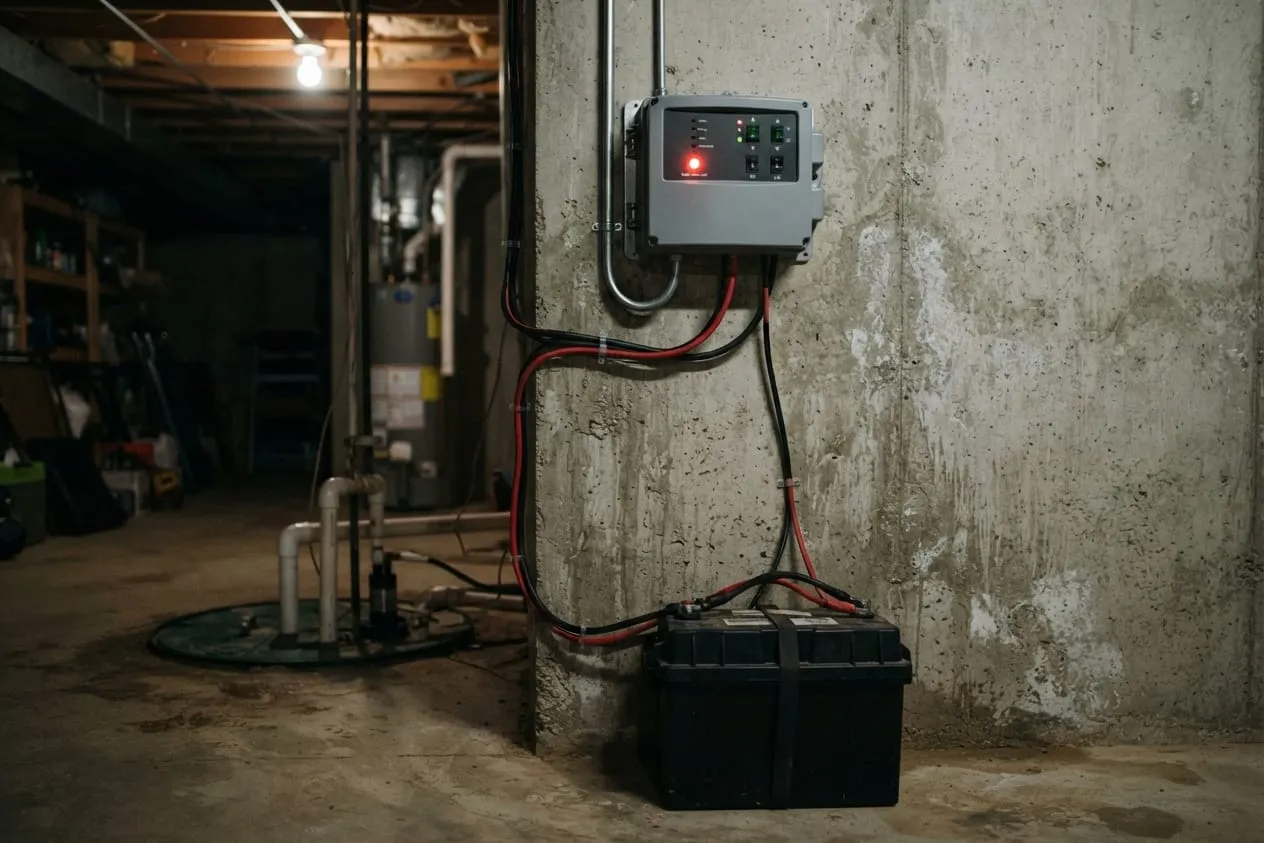
| Backup pump | Run on its own with the main pump unplugged; battery and charger checked | Weak battery, charger fault light, or no backup at all |
| Alarm | Lifted to trigger it | Silent, or a dead battery in the alarm |
If there's a sealed ejector pit in the basement too, mention it. It gets its own look: the alarm, the vent and the check valve on its discharge.
Signs it's a repair call, not a checkup
- The pump hums for a second or two before it starts.
- It kicks on every minute or two when the weather has been dry.
- Rust-colored slime or iron scale is building up on the float or the intake.
- The backup's charger shows a fault, or the battery's age is a mystery.
- A storm or a power surge already put the pump through a hard night.
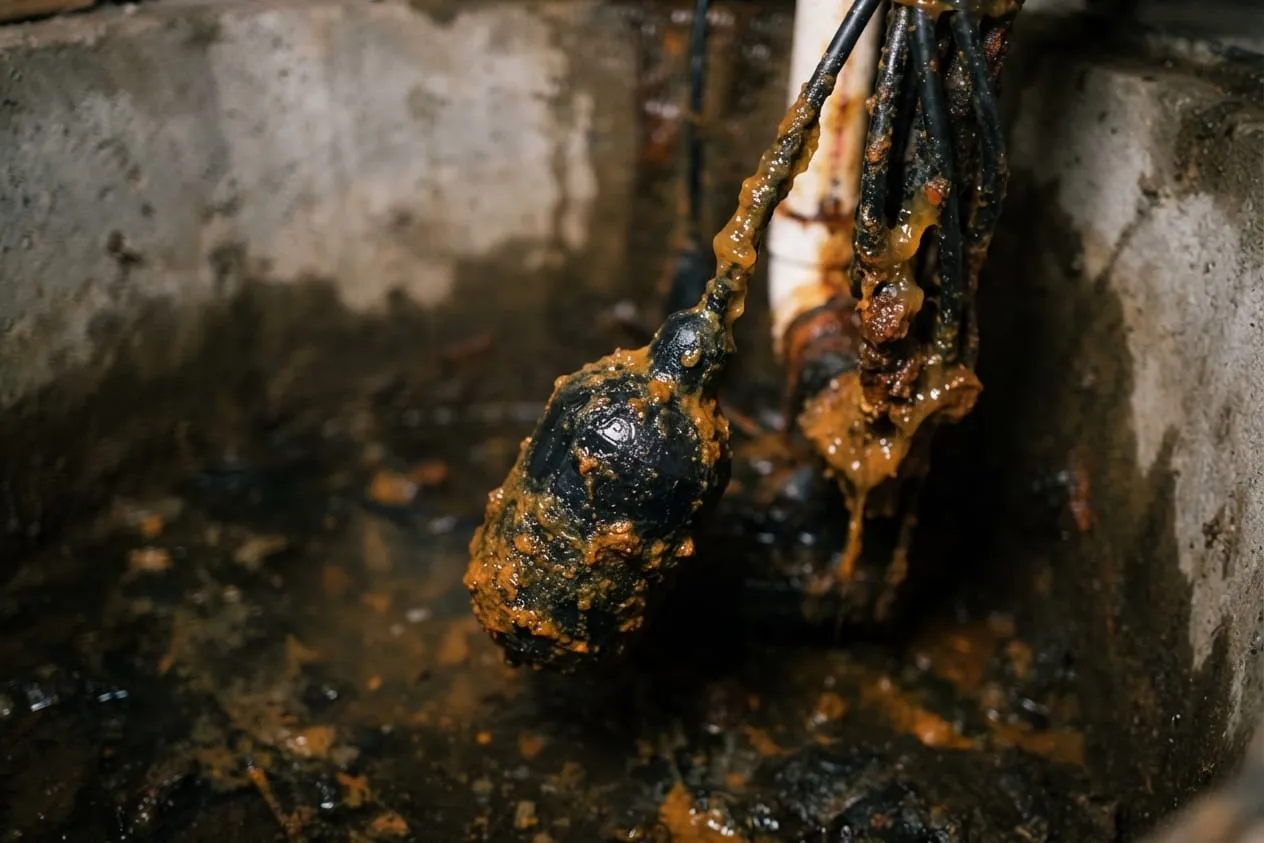
If you're seeing any of these, book the repair visit instead.
When to book the checkup
Late winter, before April
Rain at NOAA's Aurora station averages under 2 inches in each of January and February, then roughly doubles by April and peaks in May. A March checkup lands just before the pump's busy season.
Fall, before the ground freezes
The fall visit is mostly about the discharge line: a sag, a hose on the lawn or a shallow buried run will freeze shut in January. The frozen line guide explains what gets changed.
A pit you've watched empty itself
You'll see the pump start, drain the pit and stop. Anything that needs work comes with a written price, and a small part can go in on the spot if it's on hand and you approve it. If the pump turns out to be near the end, the replacement page covers what a swap involves.
Questions about sump pump checkups
How often should a sump pump get a checkup?
Once a year, before the spring rains, covers most Naperville houses. If your pump runs a lot or has a battery backup, a second look in the fall, before the discharge line has to make it through winter, catches the problems that show up with the cold.
Does the checkup include the battery backup?
Yes. The backup gets run on its own with the main pump unplugged, and the battery and charger get checked. Running it is the only way to know it will start on its own.
What happens if the checkup finds a problem?
You get a written price for the fix and decide whether to go ahead. If a small part like a check valve or a float switch is on hand, it can go in on the same visit. You only pay for work you agreed to.
Is a checkup worth it if the pump seems fine?
The visit fills the pit and runs every part while you watch, so a sticky float or a leaking valve shows up now instead of in a storm.