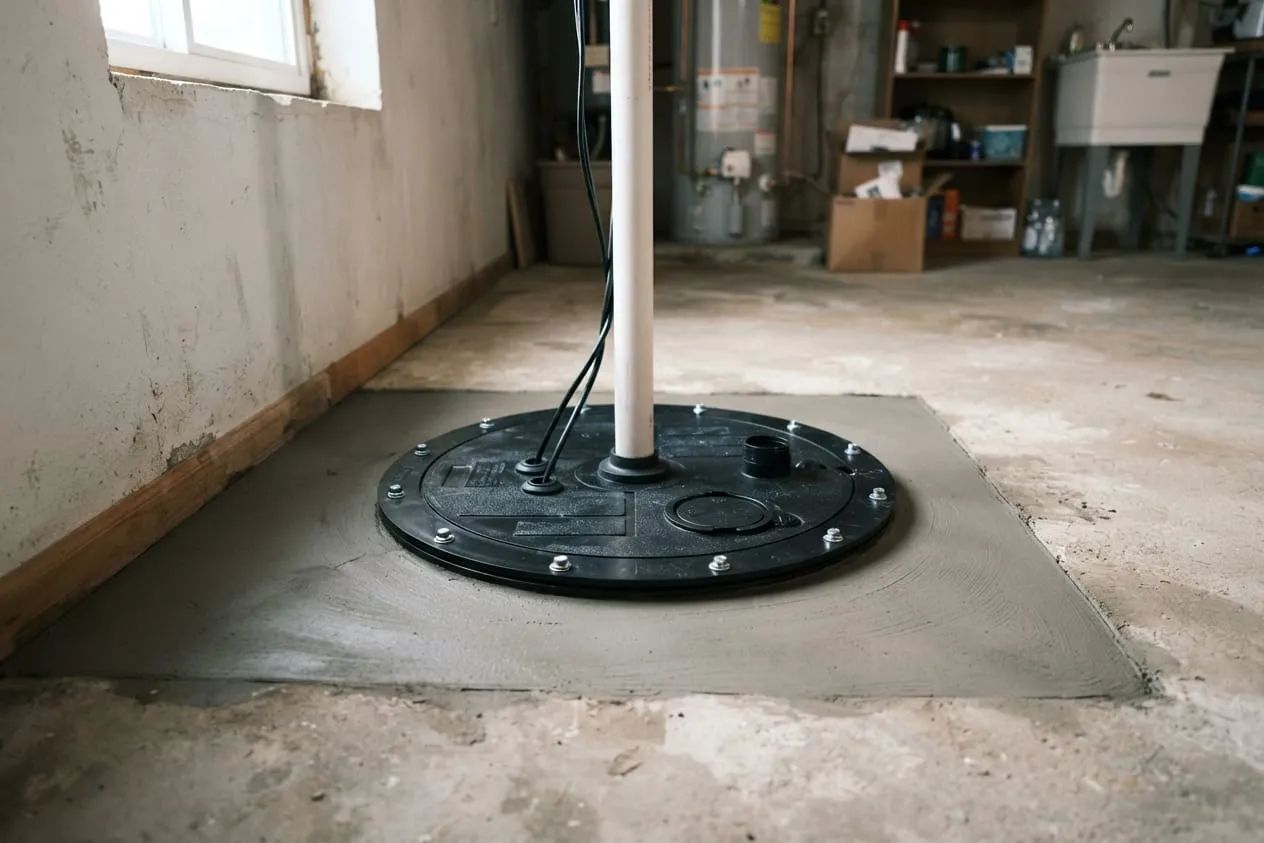
Sump Pump Naperville books sump pump installation for Naperville basements that need a pit where there isn't one, a second pit for a long wall, or a bigger basin than the one the builder put in. A plumber cuts the floor, sets the basin, ties in drain tile and runs the discharge line outside, with the price in writing before the saw comes out.
Water at the floor edge, and nowhere for it to go
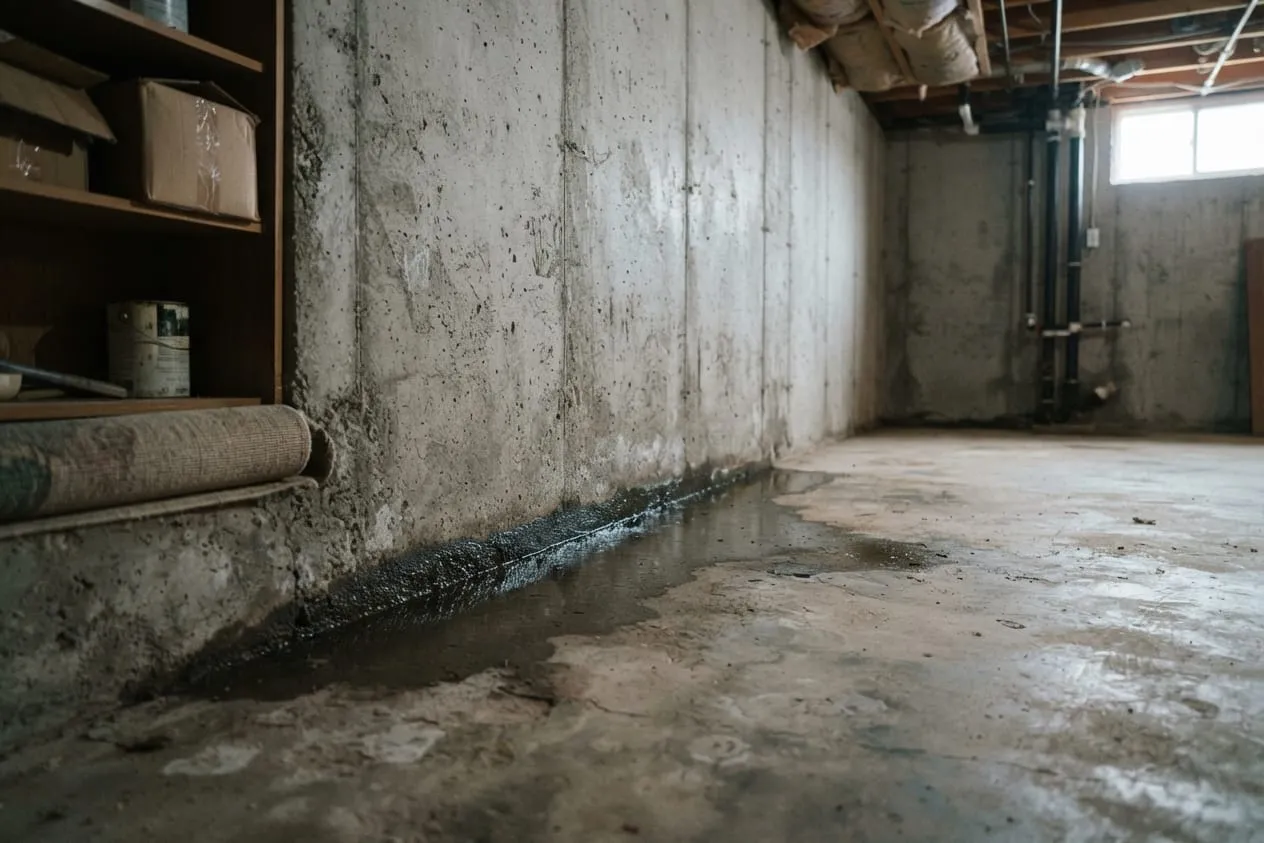
The usual sign is water along the joint where the floor meets the wall, or a damp corner that never quite dries after rain. The City of Naperville describes the standard setup for a basement as gravel backfill, perimeter drain tile and a sump pump. When the drain tile has no pit to empty into, or empties into one too far away, groundwater finds the floor instead.
In some older houses the drain tile runs to the sanitary sewer rather than to a pit. That's a different job with its own rules, covered on the footing drain page.
Sizing the pit
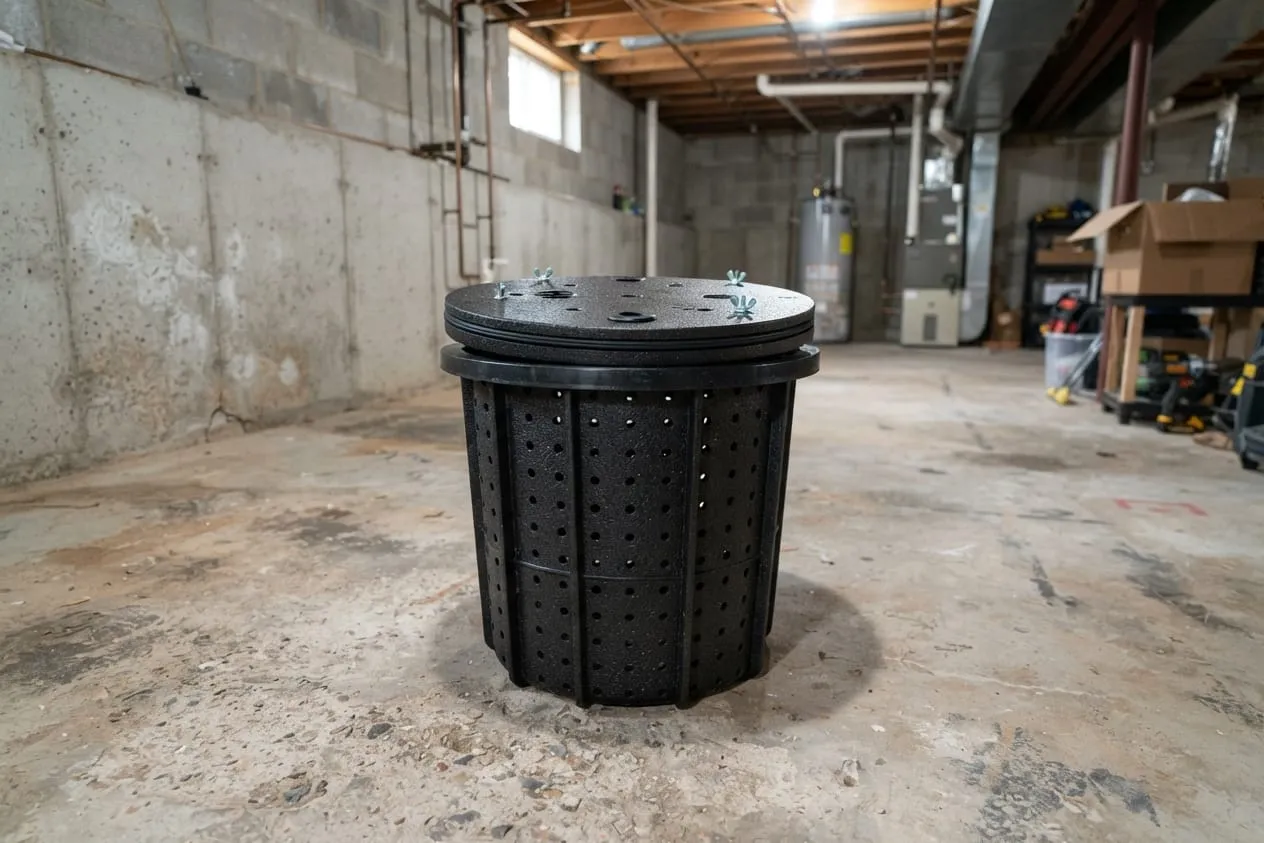
The City's sump fact sheet suggests a pit about 2 feet across, which leaves room for the pump and piping and stores roughly 15 to 25 gallons between cycles. A bigger basin means the pump starts less often and runs longer each time, which is easier on the switch. Where a backup pump is going in too, the basin has to be wide enough for both. The replacement page covers matching the pump to the pit and the lift.
How a new pit goes in
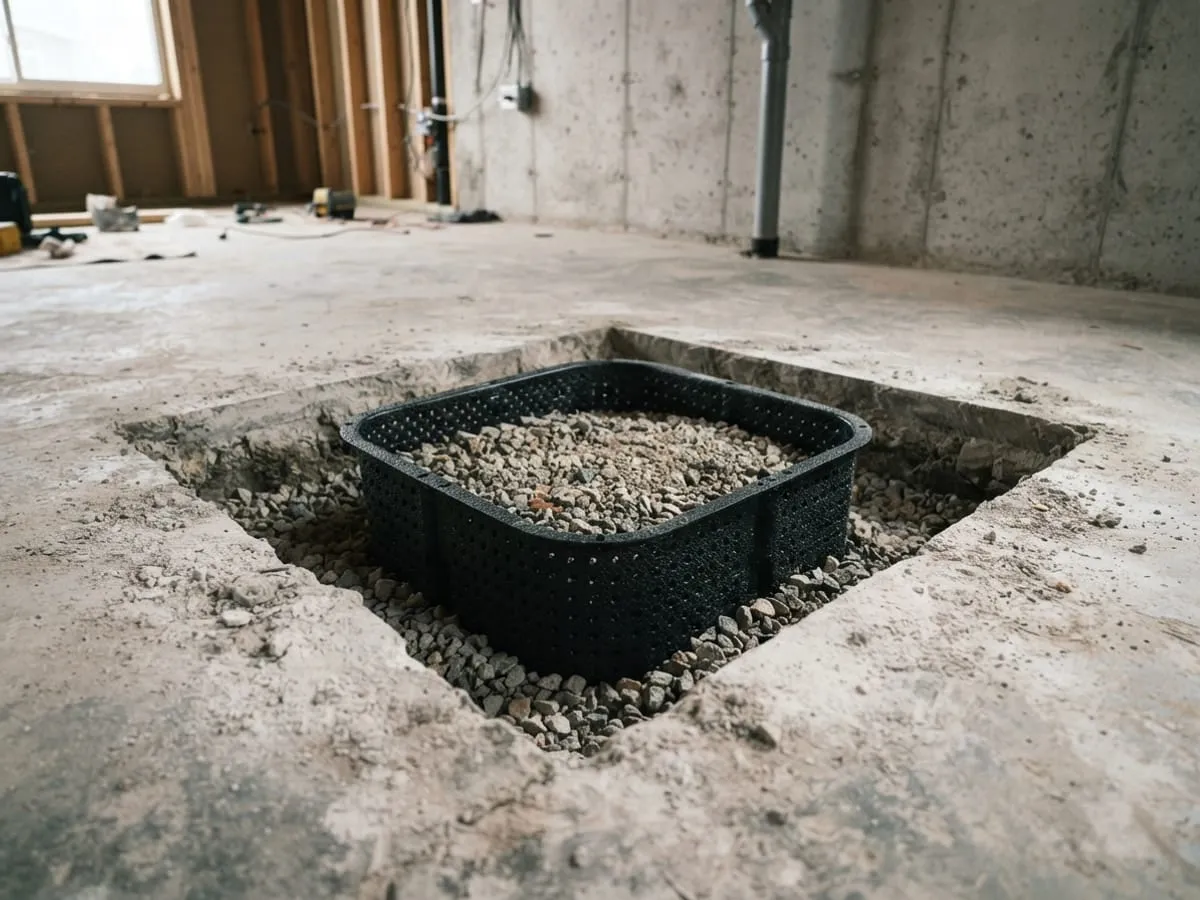
Your plumber picks the spot first: low enough to collect the water, near enough to an outside wall for a short discharge run, and clear of buried plumbing. Then the slab gets cut and broken out, and the hole is dug for the basin. The basin, perforated so groundwater can enter through its sides, goes in on a gravel bed with gravel packed around it.
If water needs a path to the new pit, a trench along the wall gets drain tile laid in gravel and runs to the basin. Then come the pump, the check valve, and the discharge line, which rises from the pit and leaves through the rim joist. The floor is patched with concrete up to the basin rim, and a fitted lid goes on. Before the visit ends, the new pump has to empty a hose-filled pit by itself.
Where the discharge line can go in Naperville
The City is specific about this, and getting it right the first time saves digging it up later:
- Not into the sanitary sewer or a basement floor drain. The City says sump pumps "cannot discharge into the sanitary sewer or a basement floor drain."
- Not onto the sidewalk or street. The City's code enforcement answer is simply "No," and its snow page gives the reason: freezing water.
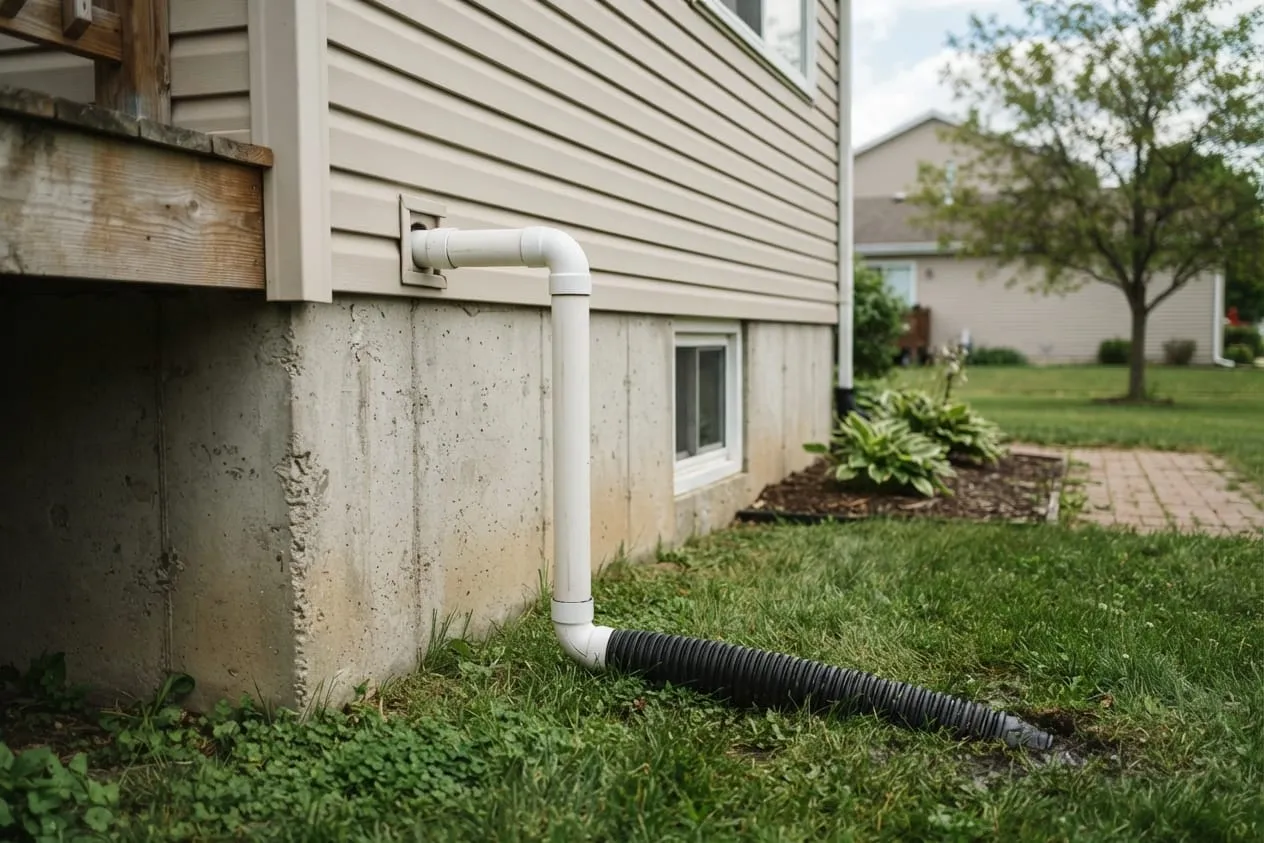
- Out into the yard, downhill. The City's fact sheet asks for at least 5 to 10 feet from the house, preferably 10, draining away from it, and never onto a neighbor's lot or into window wells.
- Into a yard storm sewer, with a permit. Where there's a City storm sewer in the yard, the line can tie into it with a City storm sewer connection permit. Digging in the parkway needs a separate right-of-way permit.
Buried lines need to stay clear of frost, or drain back after each cycle. The frozen discharge line guide covers how a line gets laid out so it doesn't ice up in January.
One pit, one job
The Illinois Plumbing Code keeps groundwater and sewage apart. Sumps that handle footing drains and subsoil water "shall not receive any sewage," and sewage sumps can't take footing drainage either. So a washing machine or a basement sink can't drain into the sump pit. Pentair, a pump maker, adds that laundry water in a sump fouls the float switch. A basement bathroom or laundry below the sewer line needs its own sealed pit, covered on the ejector pump page.
Permits
Naperville requires a permit for plumbing installation work, and a storm sewer tie-in or parkway digging needs its own permits. Any permit the job needs shows up on your written price.