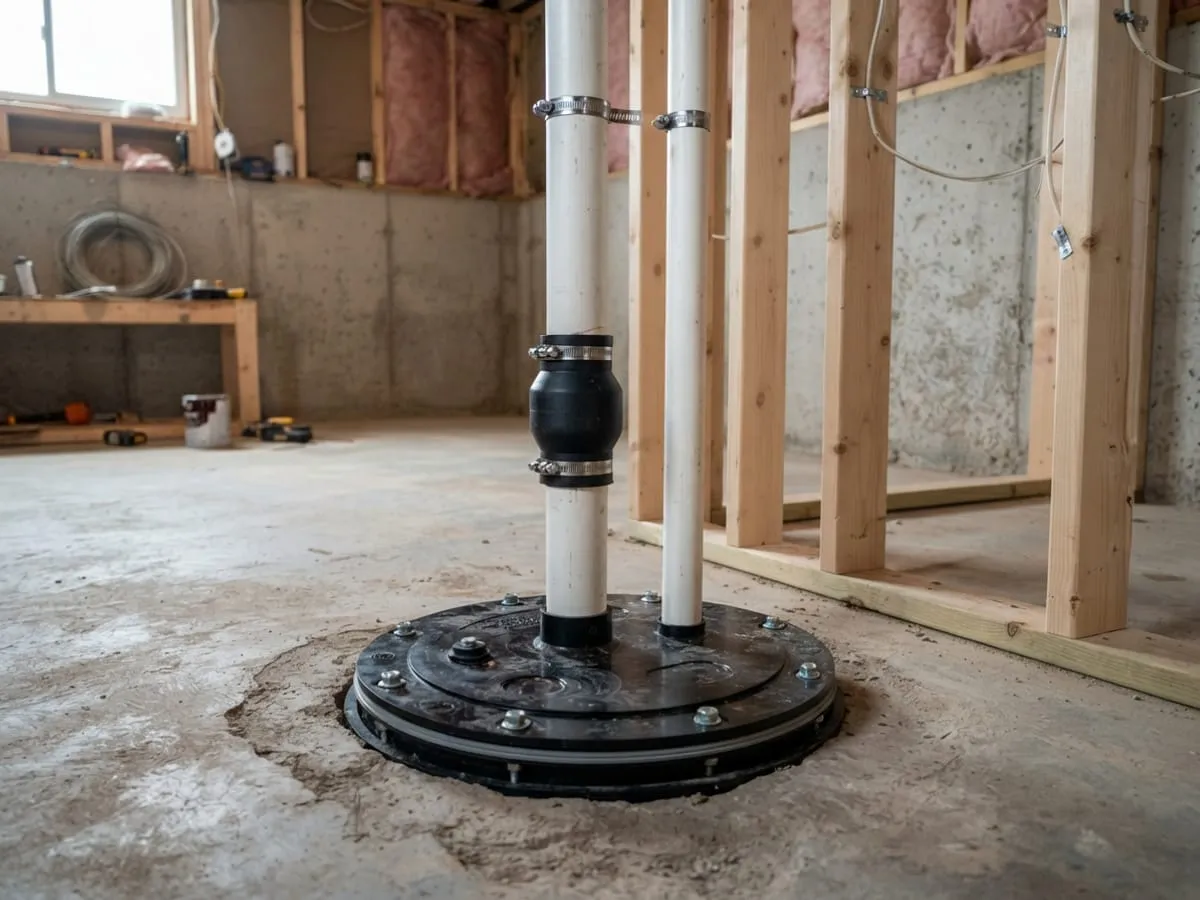
Sump Pump Naperville books sewage ejector pump repair and replacement for Naperville homes with a bathroom, laundry or bar sink below the sewer line. A plumber opens the sealed pit, finds why the pump stopped lifting, and fixes it once you've approved a written price. If the alarm is sounding right now, stop running water in the basement until it's sorted.
Why the basement bathroom drains into a sealed pit
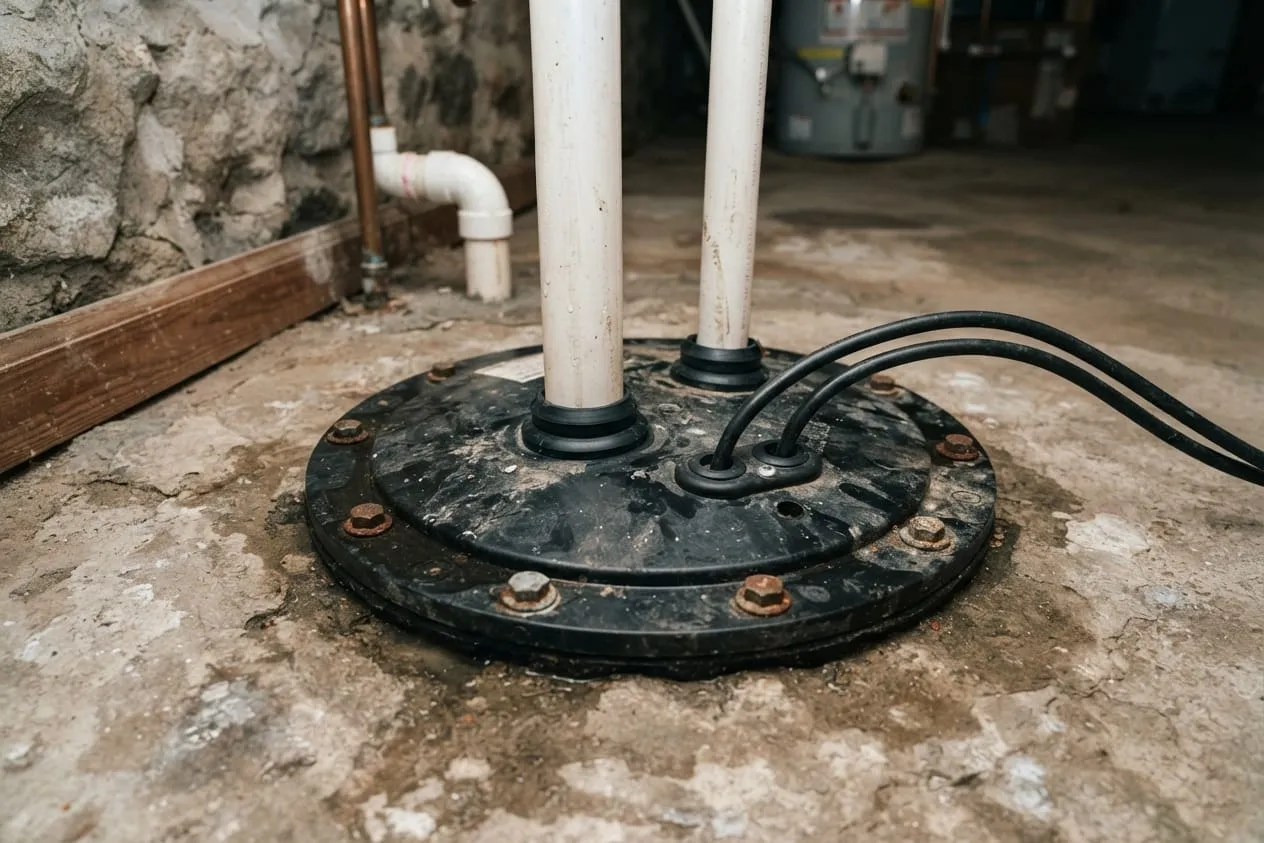
When a basement fixture sits lower than the sewer line leaving the house, gravity can't carry the waste out. The Illinois Plumbing Code says that waste goes into "a gas-tight, covered and vented sump" and gets lifted out by automatic sewage ejection equipment. That's the ejector pit: a sealed basin with a bolted lid, a vent pipe rising from it, and a pump that pushes everything up to the main drain.
Newer and remodeled Naperville basements are meant to be built this way. The City's design standards call for overhead sewers in all new construction, major additions and basement remodels. In an overhead setup, basement fixtures drain into an ejector pit and get pumped up, so nothing in the basement is open to a sewer that backs up in a storm. The storm flooding guide covers how a full sewer backs up into a basement.
An ejector pit isn't a sump pit. Illinois code keeps them separate in both directions, so the sump handles groundwater and the ejector handles everything from the fixtures.
Alarm going off, toilet slow, water backing up
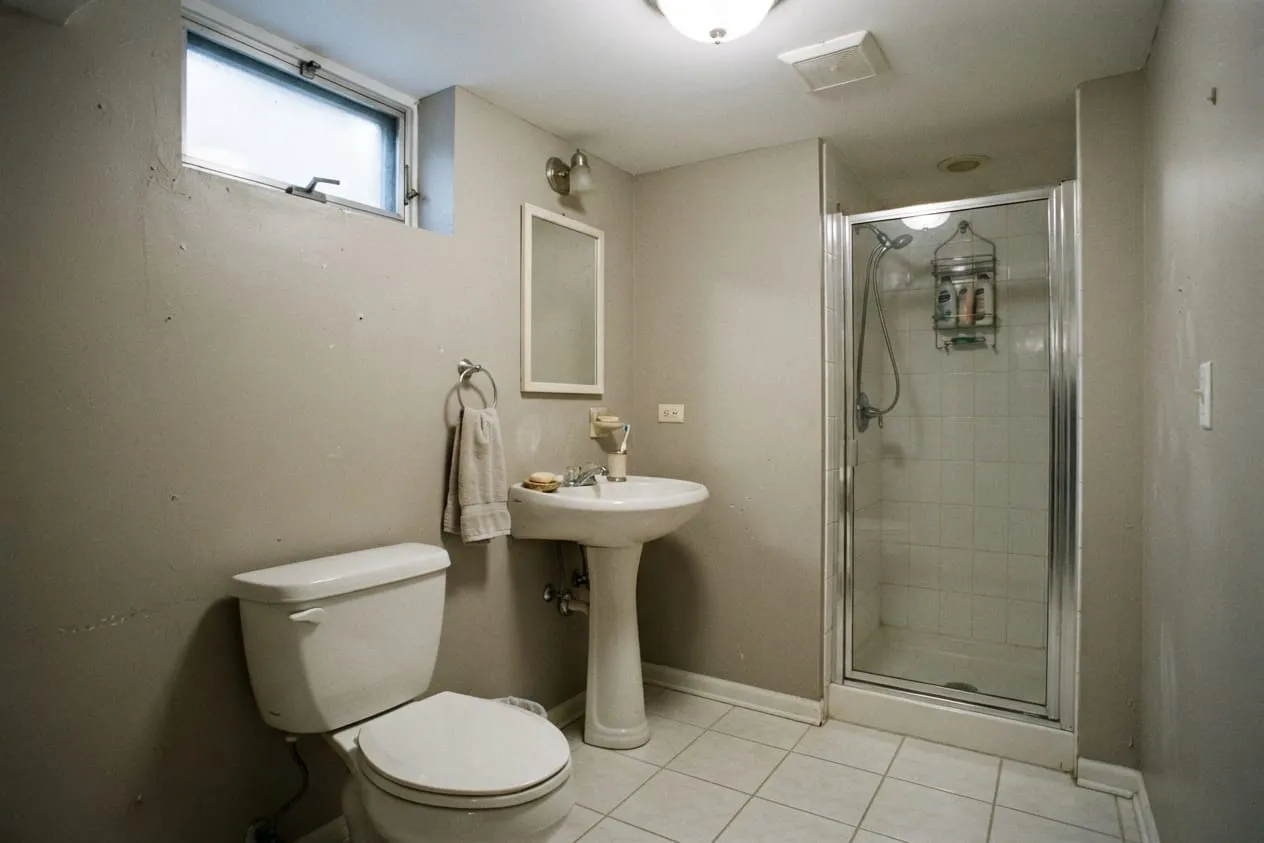
When the ejector stops keeping up, the first sign is usually the high-water alarm, a basement toilet that drains slowly, or water rising in the shower drain. Stop using every basement fixture, and the laundry upstairs if it drains to the pit, then call. The usual causes, from Little Giant's troubleshooting guide:
- Pump won't turn on. Trash or grease on the float, or something blocking its path.
- Pump runs but nothing leaves the pit. A check valve stuck or clogged, or the impeller inlet plugged.
- Pump starts and stops constantly. A check valve that's missing or leaking lets the line drain back into the pit, and Little Giant says that ends up "significantly shortening the life of the pump."
What shouldn't go down a basement toilet
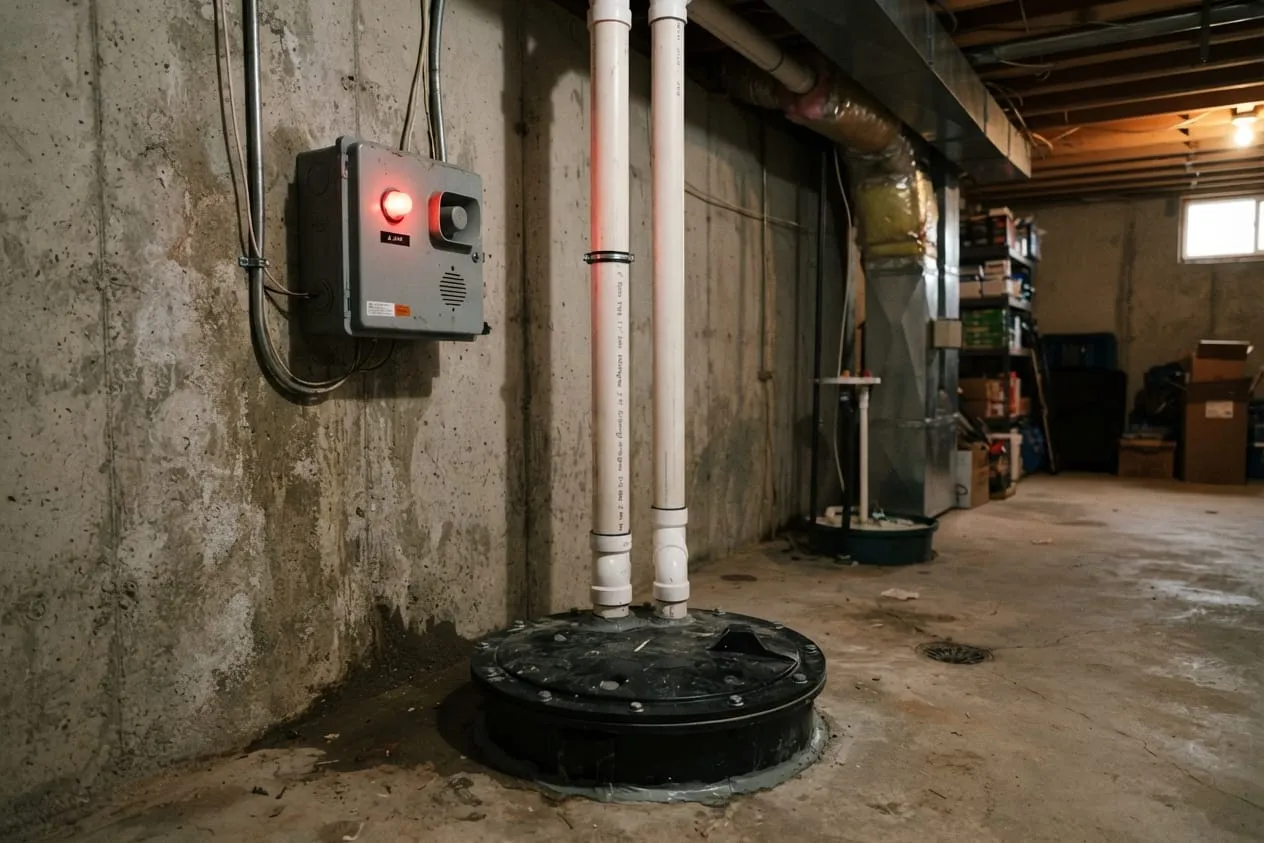
Zoeller's guide for its sewage pumps lists what not to send to the pump, including:
- "Flushable" wipes
- Kitchen grease
- Feminine hygiene products
- Paper towels
- Dental floss
Wipes don't break down the way toilet paper does, so they can wrap the float or wad up in the impeller.
Smell from the basement bathroom
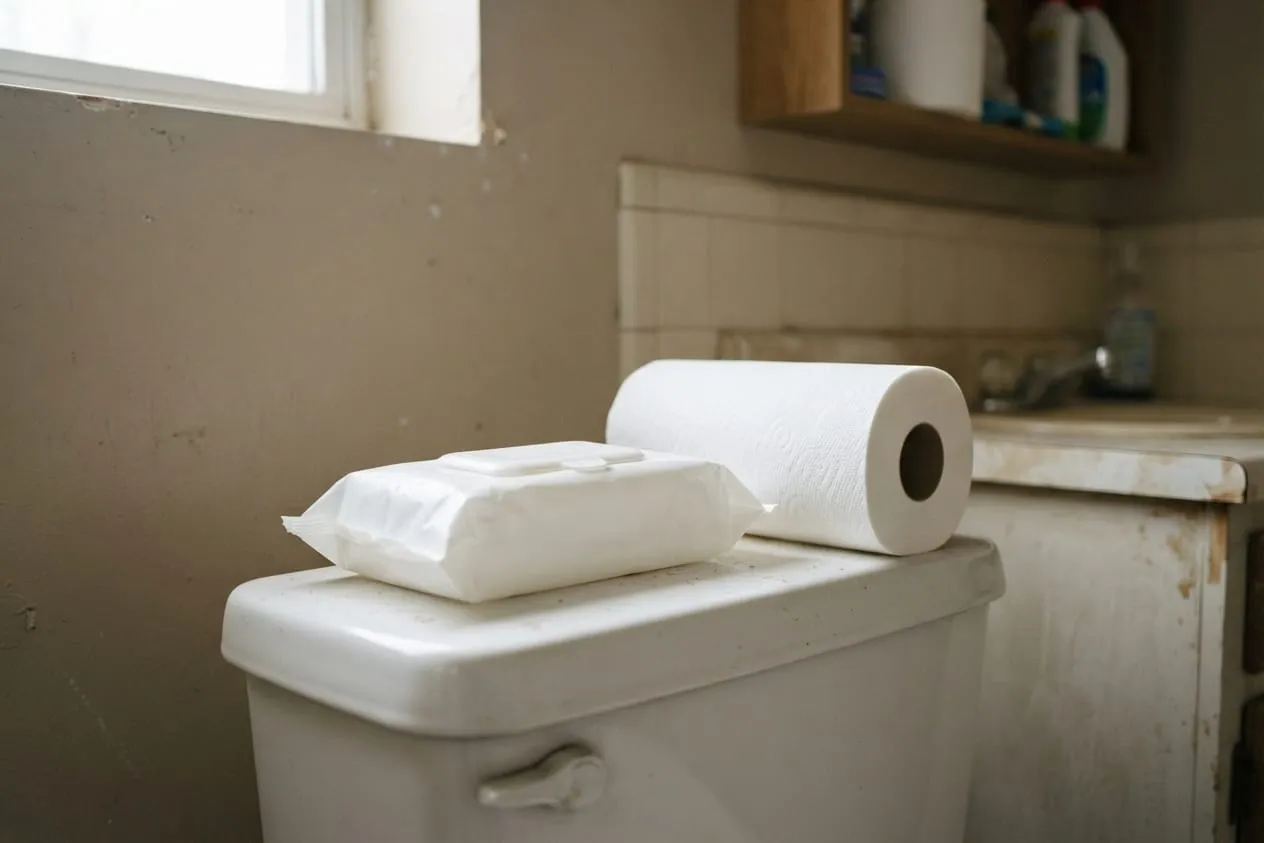
A sewer smell near the pit usually means the seal around the lid, the cord or the pipe openings has failed, or the vent is blocked. The pit is supposed to be gas-tight, and sewage gas should leave through the vent pipe rather than into the room. Your plumber checks the lid gasket, the grommets and the vent before anything else.
What an ejector setup needs
When the pump or the basin gets replaced, the pieces around it have to meet code and the pump maker's instructions:
- A 2-inch line at minimum. Illinois code says a pumped drain from an ejector can't be smaller than 2 inches.
- A pump that passes 2-inch solids, as on Little Giant's 15SC.
- A gas-tight basin at least 18 inches across and 30 inches deep, the minimum in both Little Giant's and Zoeller's instructions.
- A check valve and a shutoff valve on the discharge, so the pump can be pulled without draining the line back.
- A vent sized to code, and a high-water alarm that sounds before the pit overflows.
Repair or replace the ejector
A clogged impeller, a fouled float or a failed check valve gets repaired. A burned-out motor, a pump that trips the breaker, or a corroded pump that's been short-cycling for years gets replaced. Either way, your plumber pumps the pit down and opens it with the basement aired out, fixes or swaps the pump, reseals the lid, and runs the fixtures to watch the pump cycle and shut off.