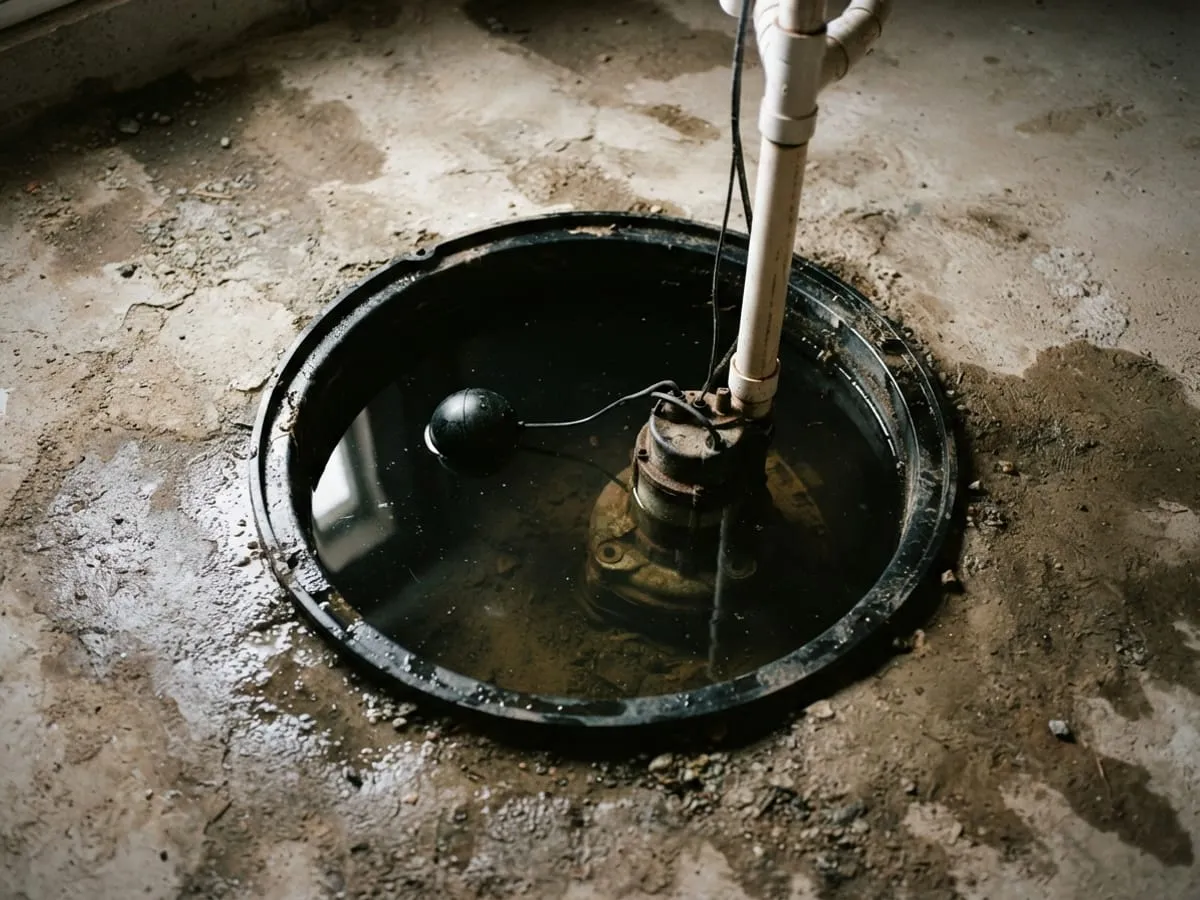
Silent, humming, running nonstop or kicking on every minute: each of those points to a different part, and knowing which one you're looking at gets the visit started in the right place. Sump Pump Naperville books sump pump repair across Naperville and the towns around it, and a plumber fixes the pump once you've approved a written price.
Silent pump, pit filling up
Water is climbing and you hear nothing. Most of these come down to power, the float or the motor:
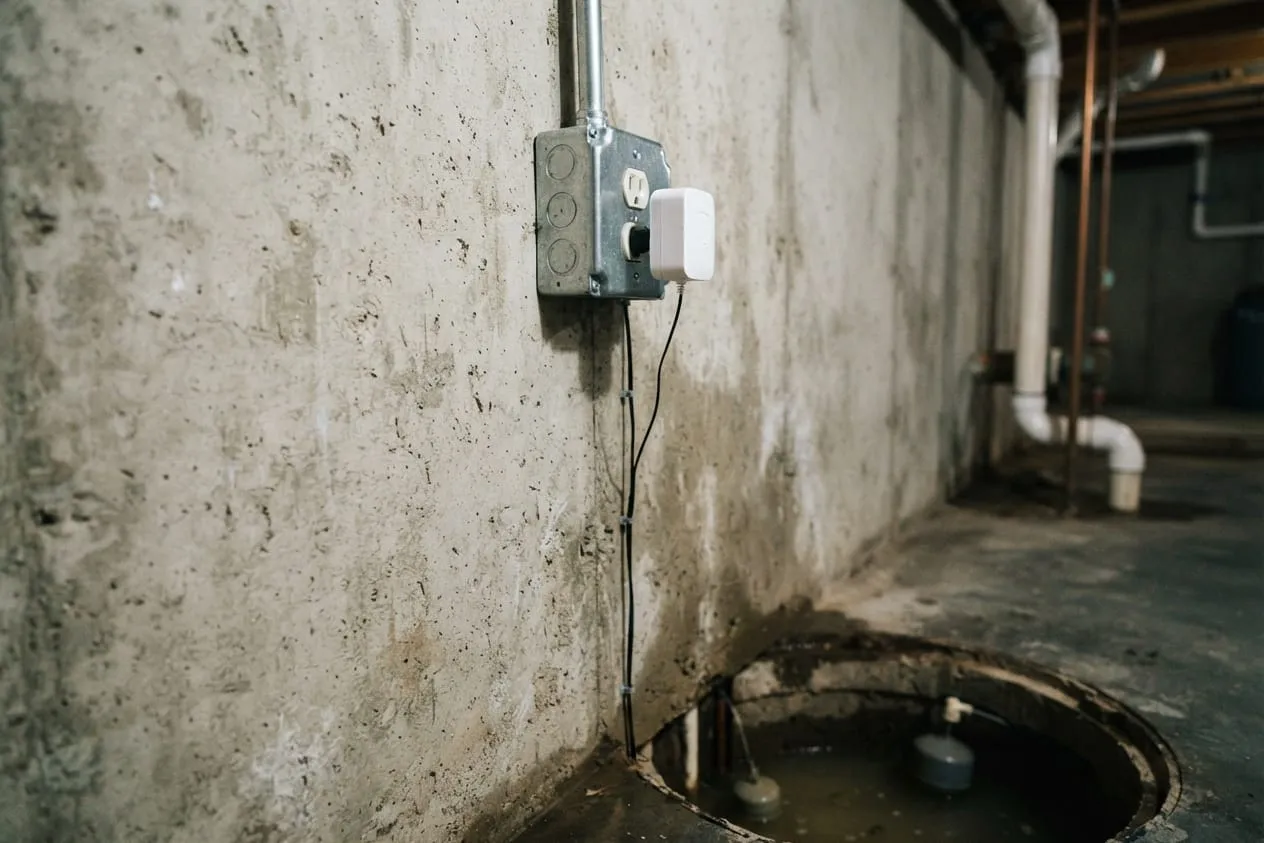
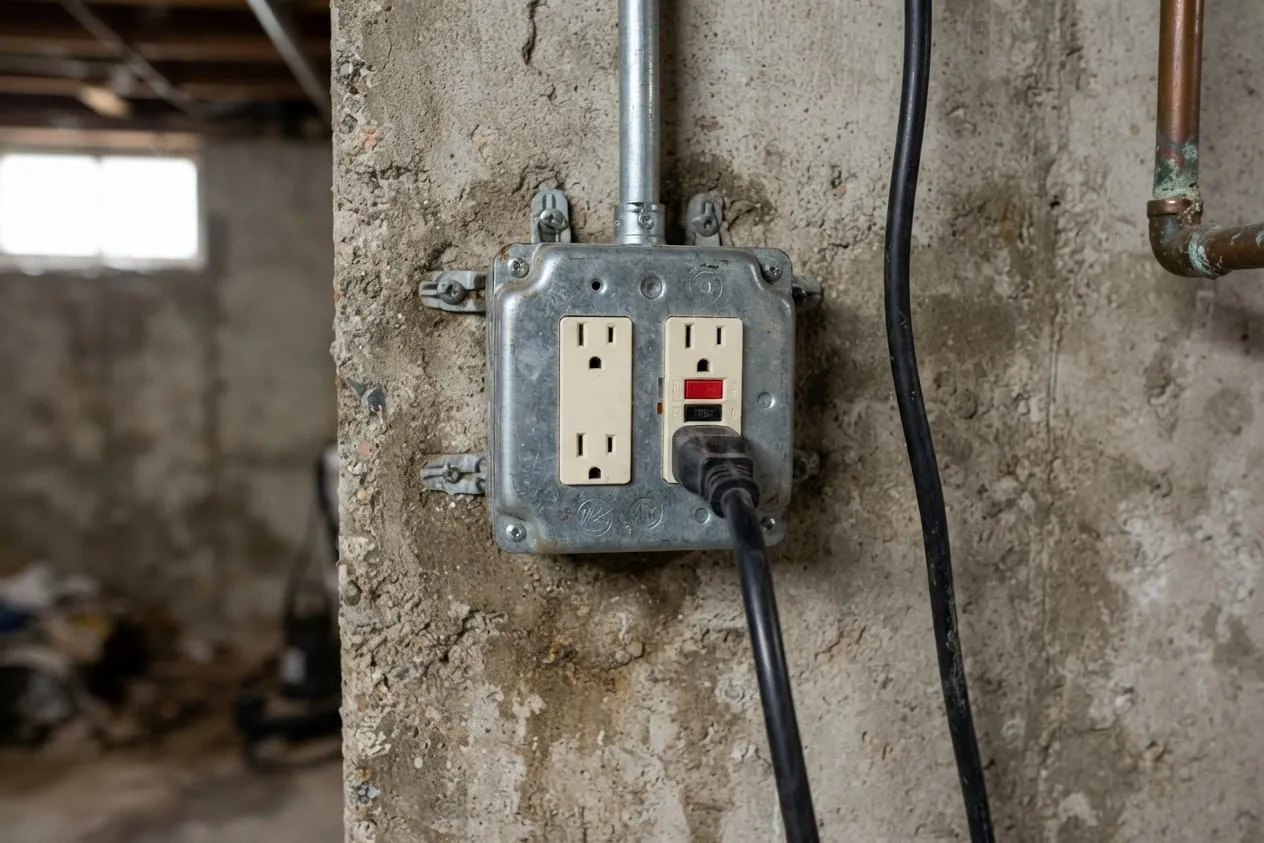
- No power at the pump. The City of Naperville's sump fact sheet calls for a pump on its own circuit, plugged into a GFCI outlet. A tripped GFCI, a tripped breaker, or a plug knocked half out of a shared outlet all look the same from the stairs.
- A float that can't rise. A tethered float can wedge against the basin wall or get pinned under the discharge pipe. A vertical float can stick on its rod with silt or iron scale. Either way the switch never closes.
- A motor that's quit. An overheated motor's thermal protection shuts it off until it cools, and a burned-out motor doesn't come back at all.
On the visit, your plumber checks for power at the outlet, lifts the float to see whether the pump answers, and checks how much current the motor draws when it does start. That separates a reset or a switch from a pump that needs replacing.
Humming, but no water moving
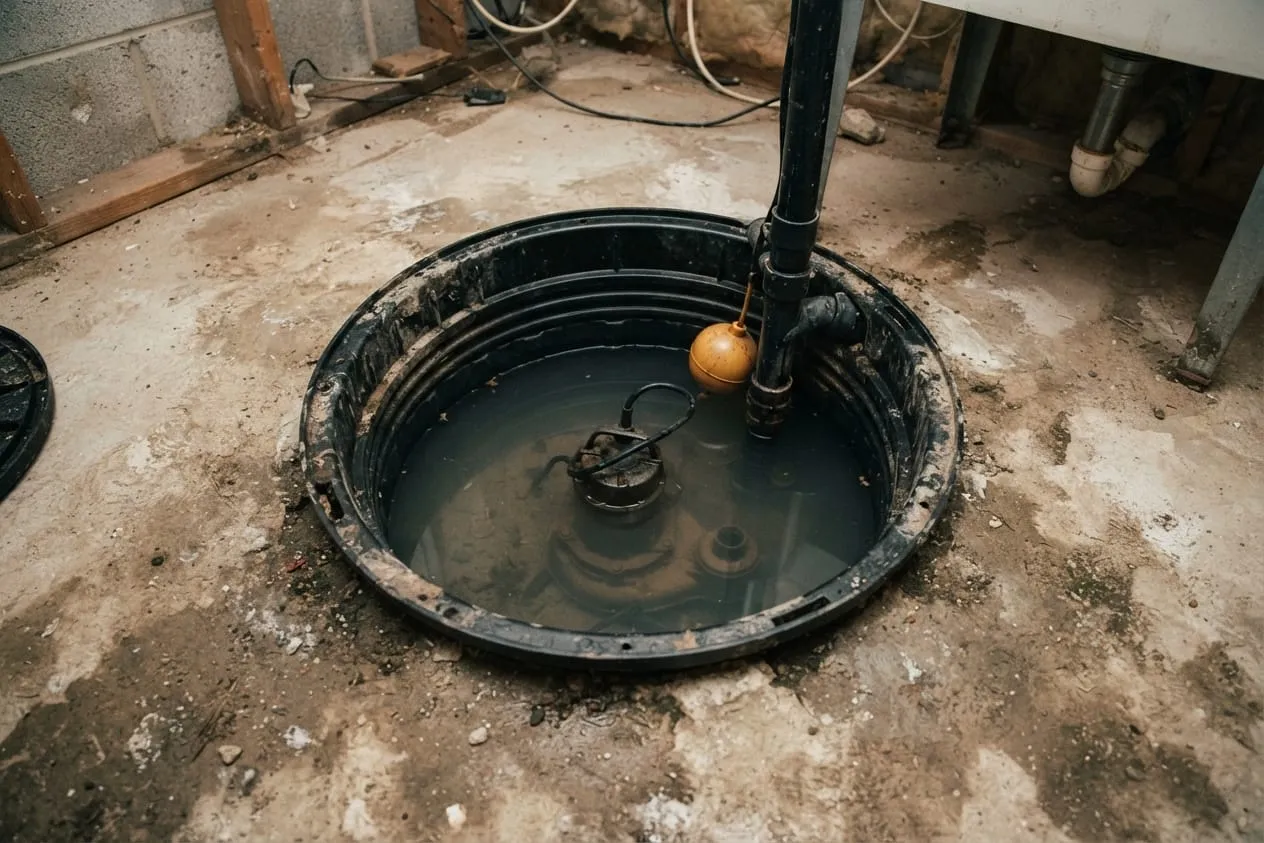
The motor has power and the water isn't moving. If the floor around the outlet is dry, unplug it after a few seconds, because a stalled motor heats up fast. The pit keeps filling once it's off, so call right away and say how far below the rim the water is. The usual causes:
- Something in the impeller. Gravel, a chunk of the old basin, or debris from the drain tile can jam it.
- An air lock. Air trapped between the pump and a closed check valve keeps the impeller spinning in air. Pump makers call for a small relief hole in the discharge pipe, inside the pit and below the check valve, so the air can escape.
- A motor that can't start under load, often on an older pump.
Running nonstop
First question: is the water in the pit going down while it runs?
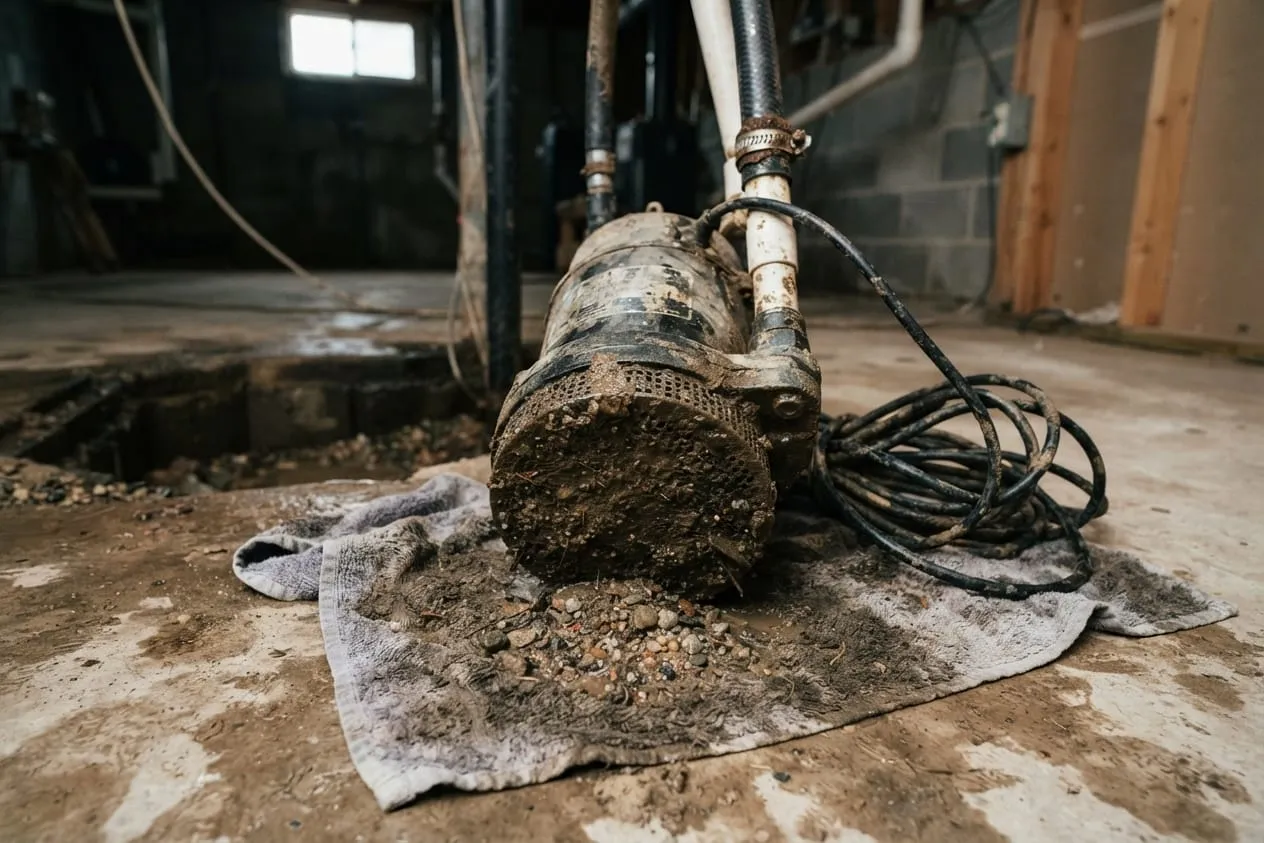
Pit dropping slowly, rain still falling. The pump may just be busy. After heavy rain, drain tile keeps feeding the pit for hours, and in spring the ground around Naperville basements stays saturated long after the storm (the home page explains why). That's normal as long as the pump keeps the level down.
Pit holding steady or rising. The pump is losing. A worn impeller, a half-clogged intake, a pump too small for the lift, or a frozen or blocked discharge line can all do it. In winter, the line outside may be frozen. The frozen discharge line guide covers that case.
Pit empty, pump still running. The float is stuck in the on position, hung up on its cord, the basin or the pipe. A pump running in an empty pit has nothing cooling it and wears out quickly. If the floor by the outlet is dry, unplug it and call.
Kicking on every minute or two
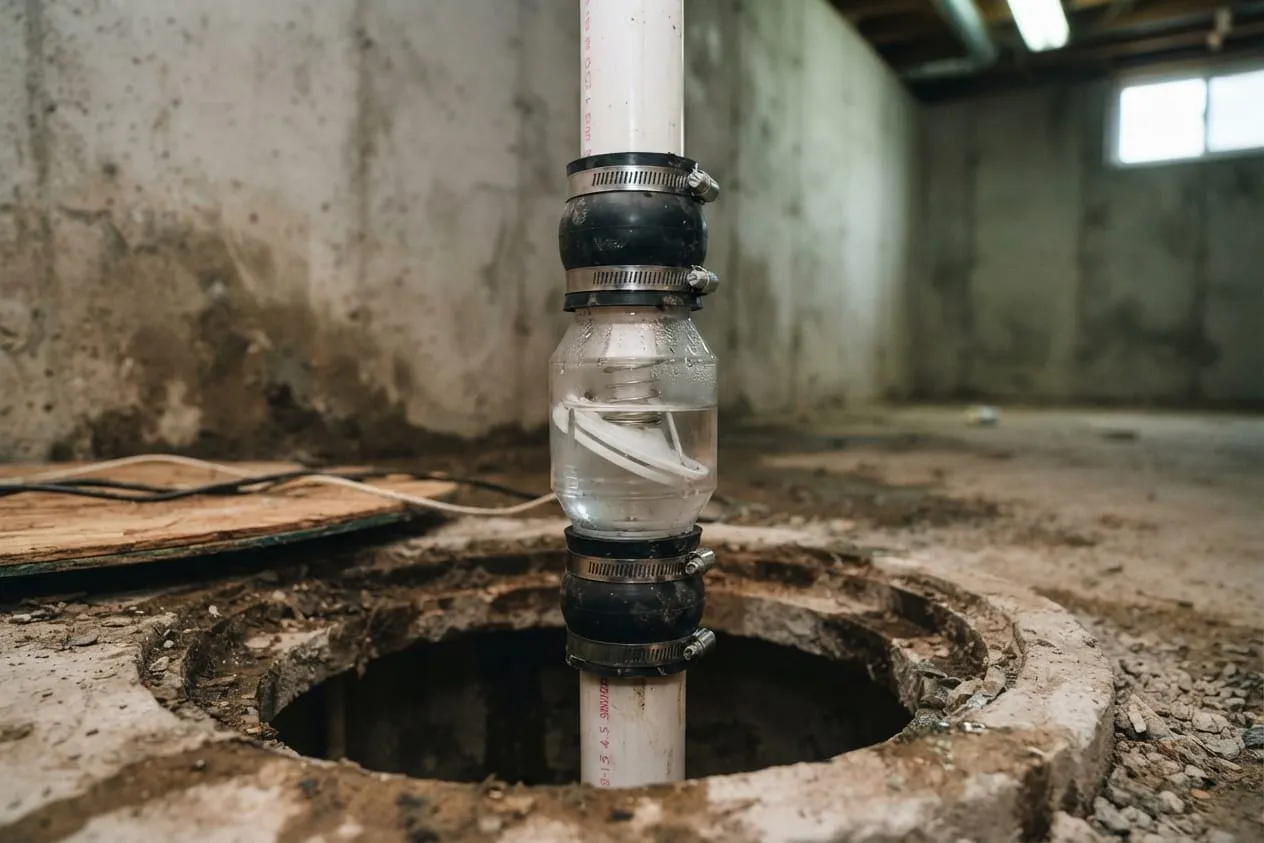
Short cycling on a dry day usually comes from the discharge side. When the check valve sticks open or its flapper cracks, the water in the riser falls back into the pit as soon as the pump stops, and the pump lifts the same few gallons over and over. Other causes are a float set to switch on and off too close together, or a pit too small to hold more than a few gallons between cycles. The City's fact sheet describes a pit about 2 feet across as the normal size.
Short cycling won't flood the basement by itself, but every start wears the switch and the motor. A check valve is one of the smaller repairs on this page.
Banging, rattling or grinding
A loud thump right as the pump shuts off is usually the check valve slamming closed under the weight of water in the riser. A rattle can be pipe knocking against a joist or the basin. Grinding or a rising whine points to bearings or debris in the impeller. Noise alone isn't urgent, but grinding often comes before a pump stops entirely.
High-water alarm going off
The alarm only tells you the water is higher than it should be. Look at the pump: silent, humming or running, then match it to the sections above. If a backup pump is running instead of the main one, the main pump has failed and the backup is holding the water down for now.
Breaker trips the moment the pump starts
Stop resetting it. A breaker or GFCI that trips as the pump starts usually means a shorted motor or water getting into the cord or plug. Keep away from the outlet if the floor around it is wet, and call. This one usually ends in a new pump.
Symptom, cause and what usually fixes it
| What you see | Usual cause | Usual fix |
|---|---|---|
| Silent, water rising | Power, stuck float, motor off on overload | Reset and find the cause, new switch, or new pump |
| Humming, no water moving | Jammed impeller or air lock | Clear the impeller, add a relief hole, or new pump |
| Running, pit not dropping | Worn pump, blocked or frozen line | Clear the line, or a larger pump |
| Running with the pit empty | Float stuck on | Unstick or replace the switch |
| Cycling every minute, dry weather | Check valve leaking back | New check valve |
| Breaker trips on start | Shorted motor or wet cord | New pump, outlet checked |
Fix the part, or replace the pump?
A switch, a check valve, a clogged intake or a jammed impeller gets repaired. A burned-out motor, a cracked housing, or an older pump that has run hard through years of wet springs gets replaced, because the next failure is close behind the first. Your plumber tells you which it is, with both prices in writing if both make sense. The sump pump replacement page covers what a proper swap includes, and the cost guide covers what drives the price.
What the repair visit covers
Your plumber fills the pit with a hose or bucket rather than waiting for rain, and watches the whole cycle: the float lifting, the pump starting, the level dropping, the check valve closing, the pump shutting off. Then the discharge line gets followed outside to where the water actually goes. The repair is done when that cycle runs clean on its own, with no help from anyone.