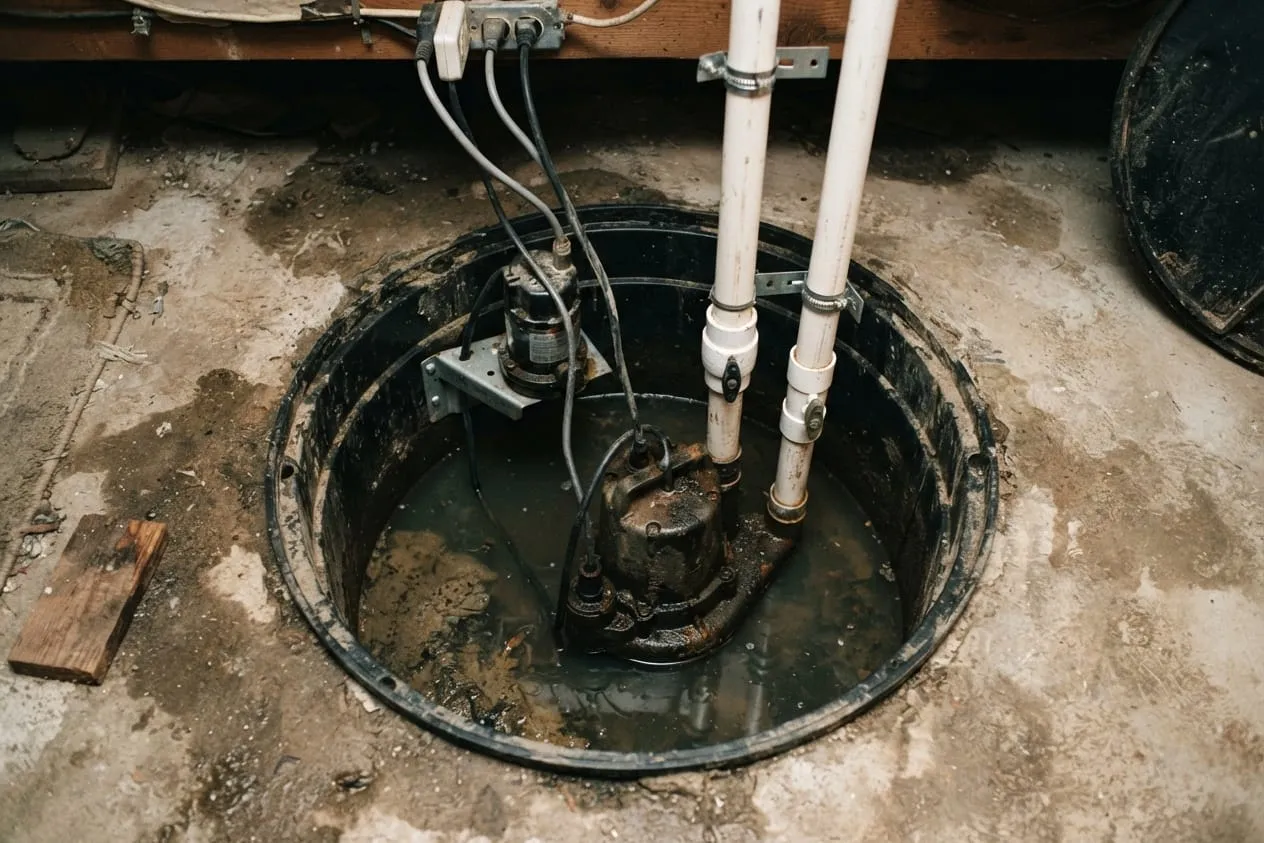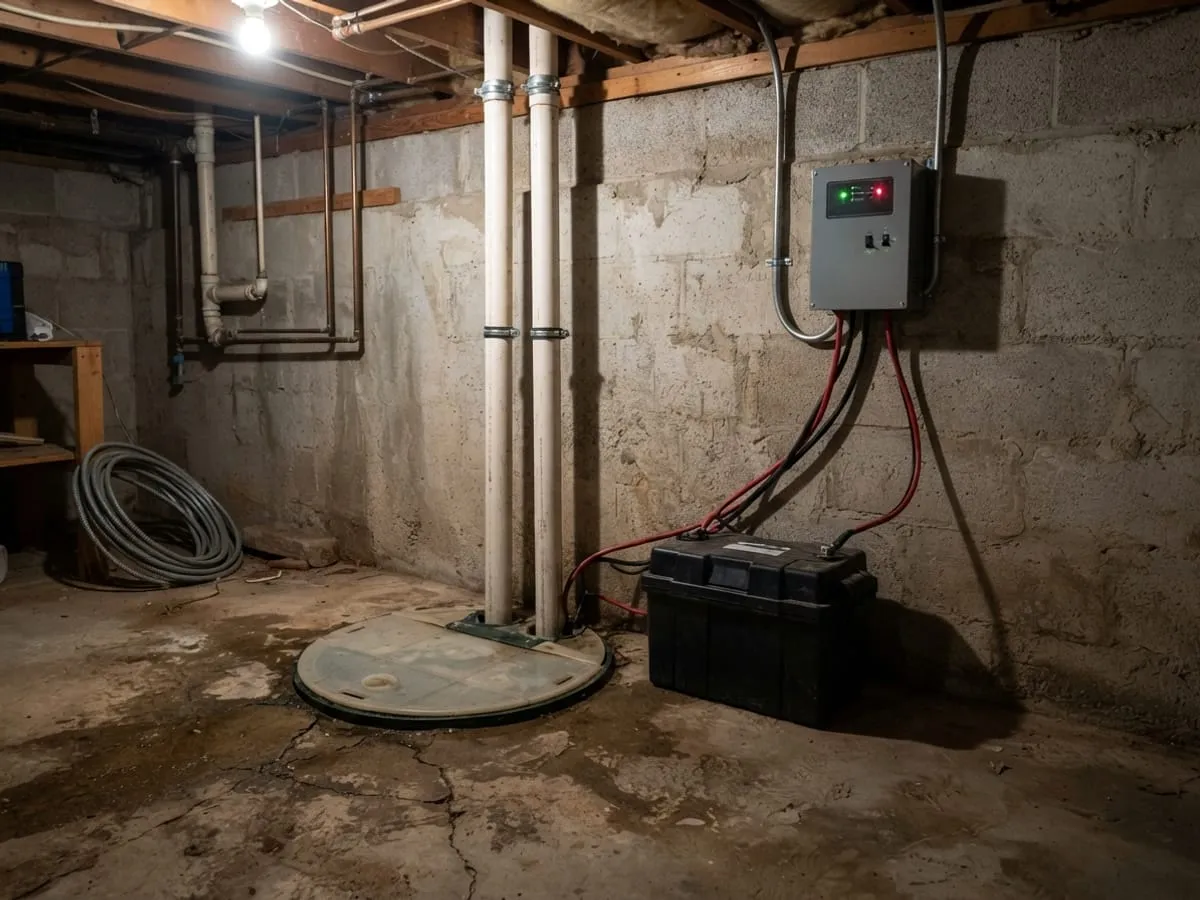
A backup pump covers two situations: the power goes out, or the main pump stops with the power on. In Naperville the second one counts for more than it does in the towns next door. Sump Pump Naperville sets up battery and water-powered backups across Naperville and the surrounding suburbs, and a plumber adds the second pump to your existing pit, wires in its alarm and tests it with the main pump unplugged.
Naperville outages are short, but main pumps still fail
Inside city limits, Naperville runs its own electric utility, serving more than 63,000 customers. The City says its distribution system is 95% underground and that customers averaged 15 minutes without power in 2025. The City credits the buried lines with reducing outages.
That doesn't make a backup optional, because the main pump can stop with the lights on. A float hangs up on the basin wall, a motor burns out after years of hard cycling, a GFCI trips, or a downpour brings in more water than one pump can lift. A backup sits higher in the pit and starts when the water passes the main pump's level, whatever the reason.
Not every Naperville mailing address is on City power. The City says homes outside city limits get electricity from ComEd, and ComEd also serves Aurora, Plainfield, Bolingbrook, Joliet, Lisle and Wheaton. On ComEd, a backup covers outages as well as pump failures. The City's own flood page notes that a battery backup "can provide temporary protection, but extended outages may require supplemental power from a generator."
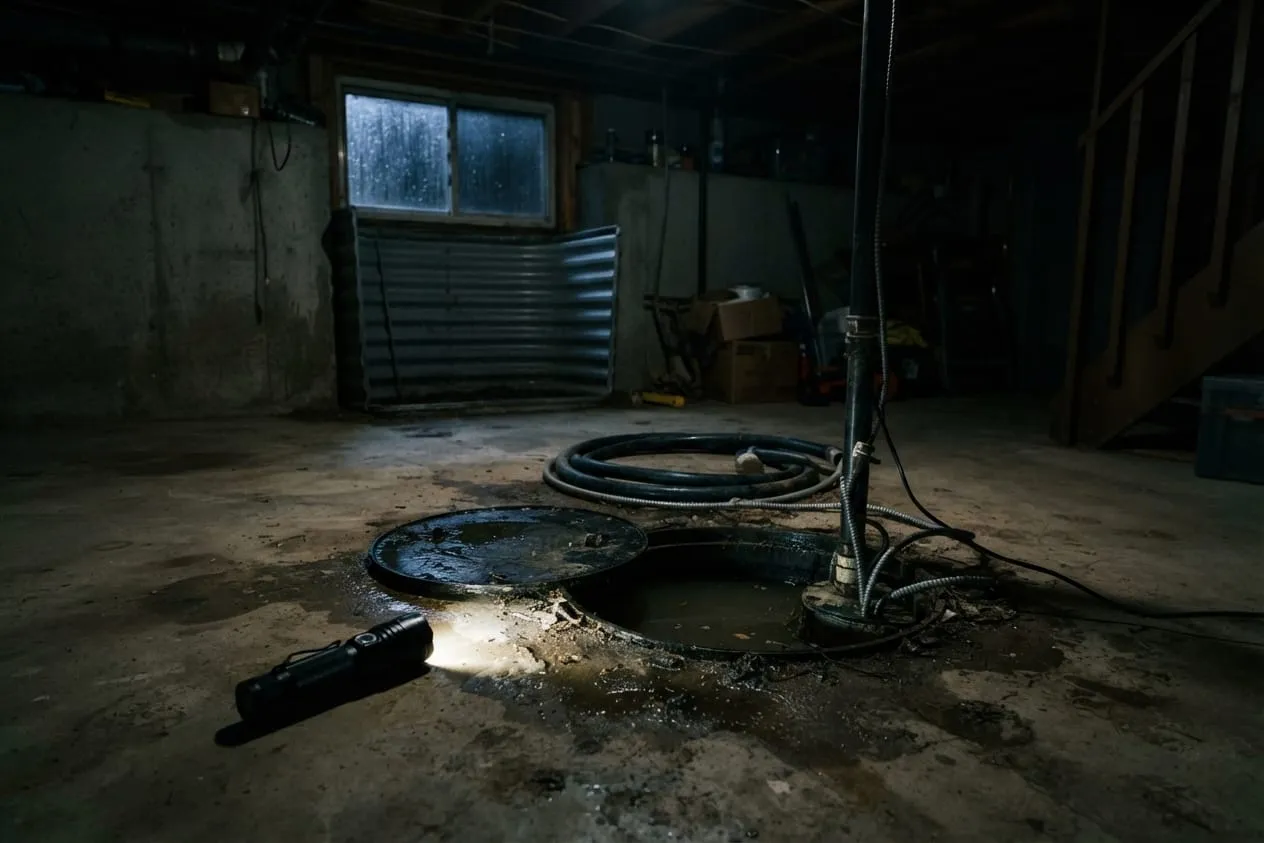
Battery backup or water-powered backup
| Battery backup | Water-powered backup | |
|---|---|---|
| What drives it | A 12-volt pump on a deep-cycle or AGM battery, kept charged by a charger | City water pressure, through a jet that pulls water out of the pit |
| How long it runs | Until the battery is spent (see below) | As long as the city water stays on and the pressure holds |
| How much it moves | Less than most main pumps | Depends on your water pressure and the lift |
| Upkeep | Battery checks and replacement every few years | Little upkeep; uses city water each time it runs |
| Needs | Room for the battery box near the pit | City water (not a well) and an approved backflow device |
How long a battery backup keeps the pit down
Runtime depends on the battery and on how often the pit fills. Liberty Pumps' manual for its 442 battery backup gives a useful picture. On one Group 31 wet-cell battery it rates the pump at 30 gallons a minute at a 10-foot lift, running continuously for about 5.5 hours, or roughly 8,000 gallons. If the pump only cycles four times an hour moving 10 gallons each time, Liberty rates the same battery at about 8 days.
Those two numbers are the range to think about. A light rain during an outage is the 8-day case. A storm that keeps the pit filling nonstop is the 5.5-hour case.
A backup pump often moves less water than the pump it backs up. Basement Watchdog's combination unit is a clear example: its main AC pump is rated at 3,100 gallons an hour at 10 feet, and its battery backup at 1,000. A backup covers a failure and holds the level for a while. On its own, it may not keep up with the worst hour of a storm like April 2013. Where the pit fills fast, your plumber may suggest a larger backup or a second battery.
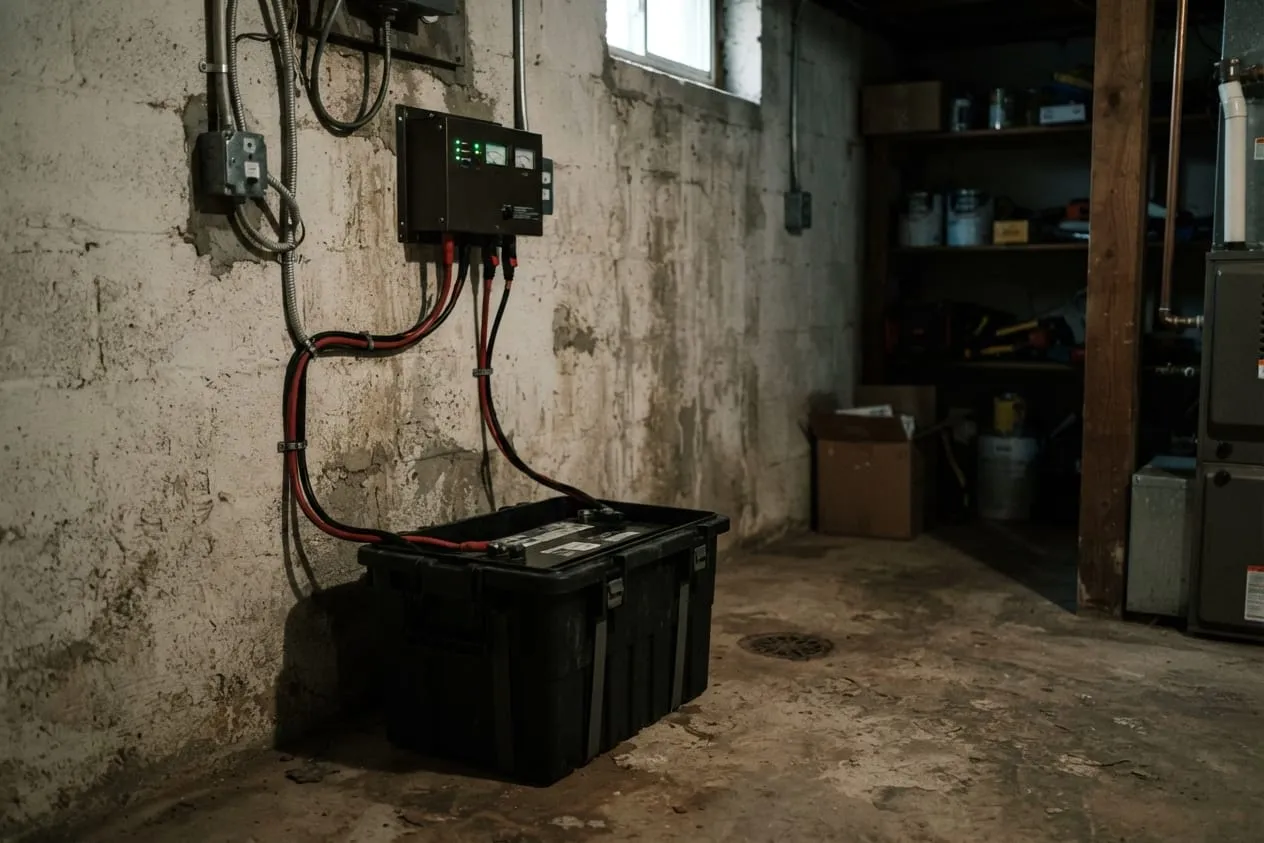
Water-powered backups under Illinois rules
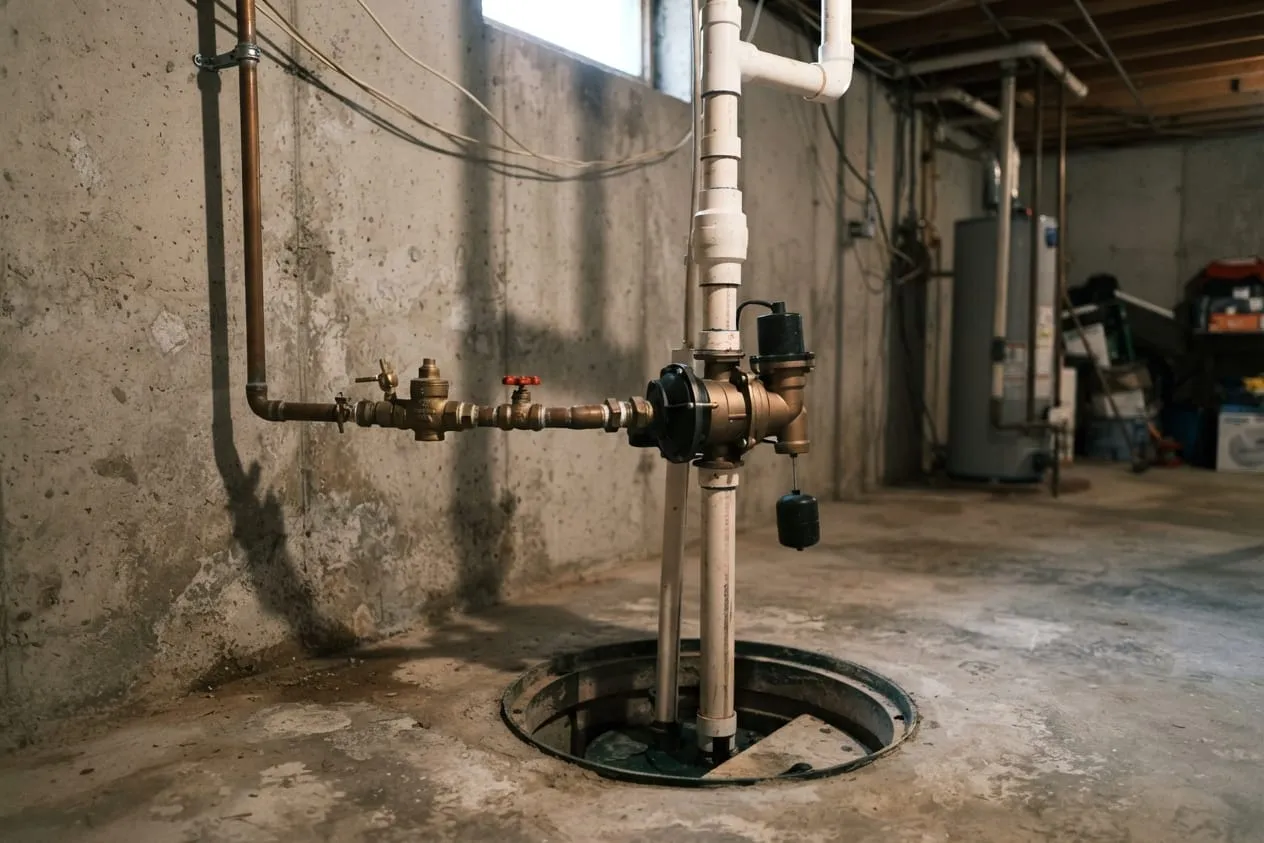
The Illinois Plumbing Code, which Naperville uses as its primary plumbing code, sets specific conditions for water-powered sump pumps:
- They can only be used as an emergency backup, never as the main pump.
- They need a battery-powered alarm rated at least 85 decibels at 10 feet.
- They must pump at least 1.4 gallons to a height of 10 feet for every gallon of water they use, measured at 60 psi, and be labeled with that ratio.
- A stormwater unit needs a dual check valve with an atmospheric vent (ASSE 1012 or CSA B64), which keeps sump water from getting back into the drinking water.
Pressure decides how well one works. Liberty's SumpJet needs at least 30 psi, uses about a gallon of city water for every 2 gallons it removes, and its chart shows it moving about 750 gallons an hour at 40 psi with an 8-foot lift. The City doesn't publish typical household pressure, so your plumber measures it at the house.
Keeping a backup ready for the storm
The manufacturers' own instructions give the upkeep schedule:
- Test it regularly. Liberty's manual calls for a test at least every three months, with the main pump unplugged so the water rises to the backup.
- Watch the battery's age. Basement Watchdog says to replace a backup battery that's more than five years old.
- Check the fluid on a wet-cell battery. Basement Watchdog says every 4 to 6 months, and attributes most backup failures to batteries that dried out. Sealed AGM batteries skip that step.
- Keep the alarm alive. On Liberty's 442, a 9-volt battery runs the alarm for up to 72 hours if the charger loses power.
A yearly sump pump checkup includes these checks along with the main pump.
Where the backup goes
The backup pump sits in the same basin as the main pump, with its switch set a few inches above the main pump's turn-on level so it only runs when the main pump falls behind or stops. It gets its own check valve and joins the discharge line or runs out separately, depending on the setup. The battery box and charger mount beside the pit, off the floor, where they stay dry. If the pit is too tight for two pumps, a larger basin comes first, which is covered on the new pit installation page. Your price comes in writing before any of it starts, and the job is done when the backup empties the pit on its own with the main pump unplugged.