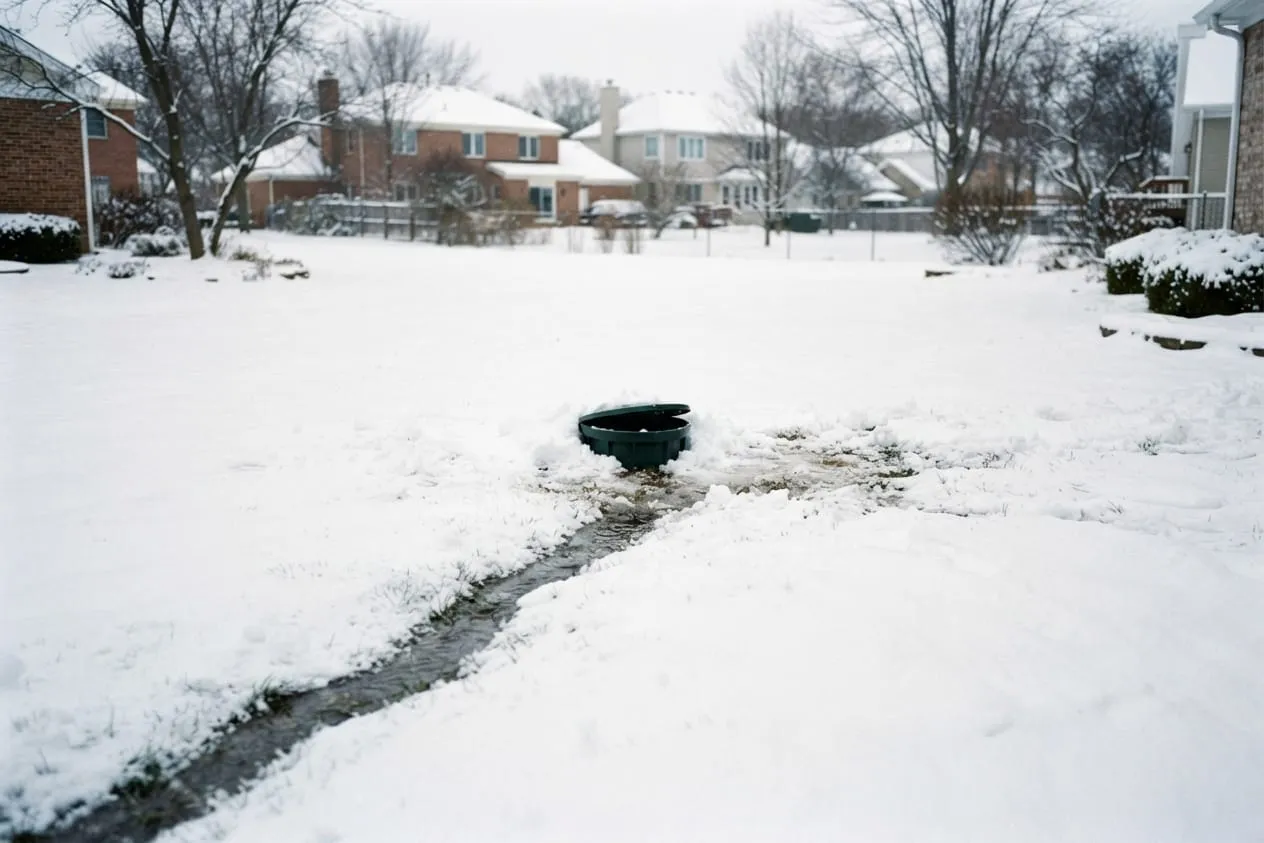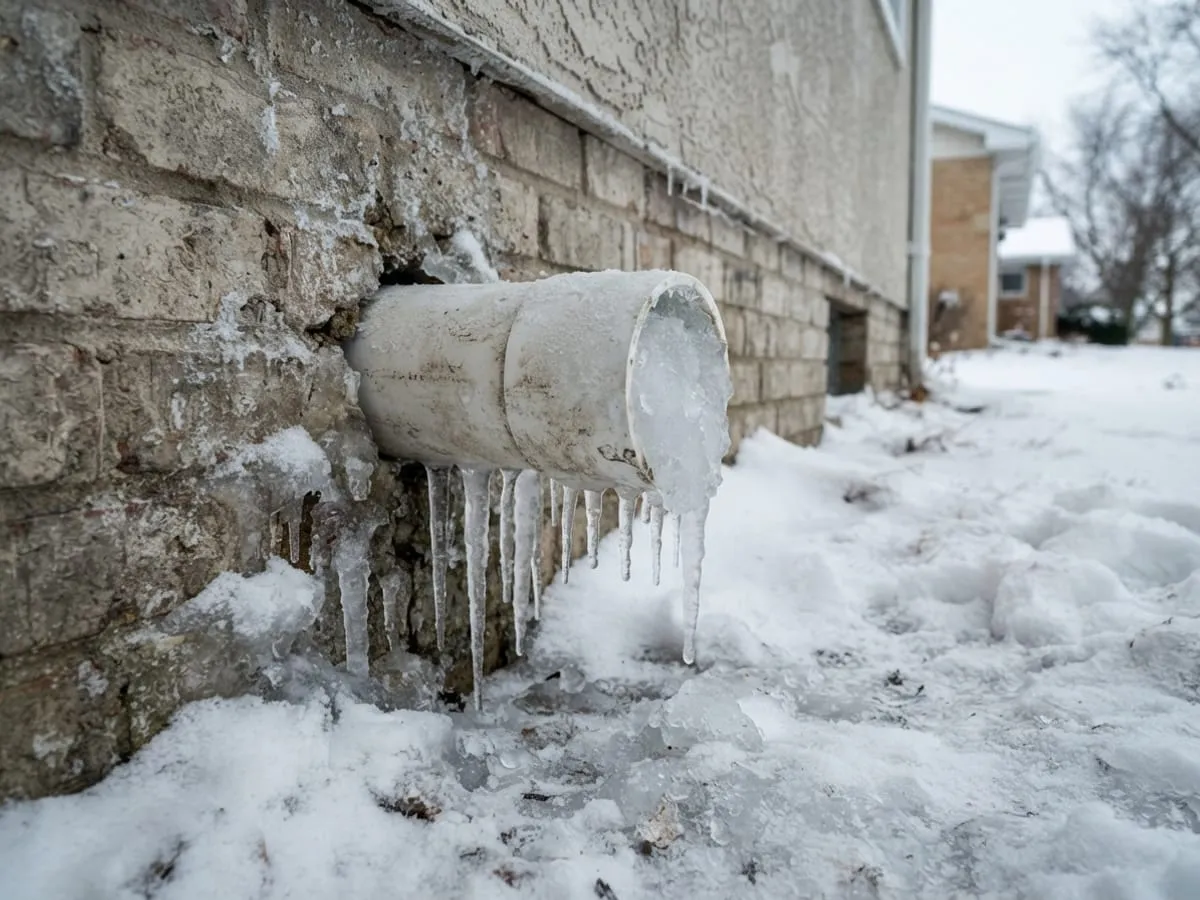
A discharge line freezes where water sits in it between cycles: a sag, a flat run, a hose on the lawn or a shallow buried pipe. Tonight, keep the pump from running nonstop against the ice and call. To stop it coming back, the line gets pitched to drain, given a relief point near the house, and sent somewhere it can't freeze shut.
Pump running, pit not going down
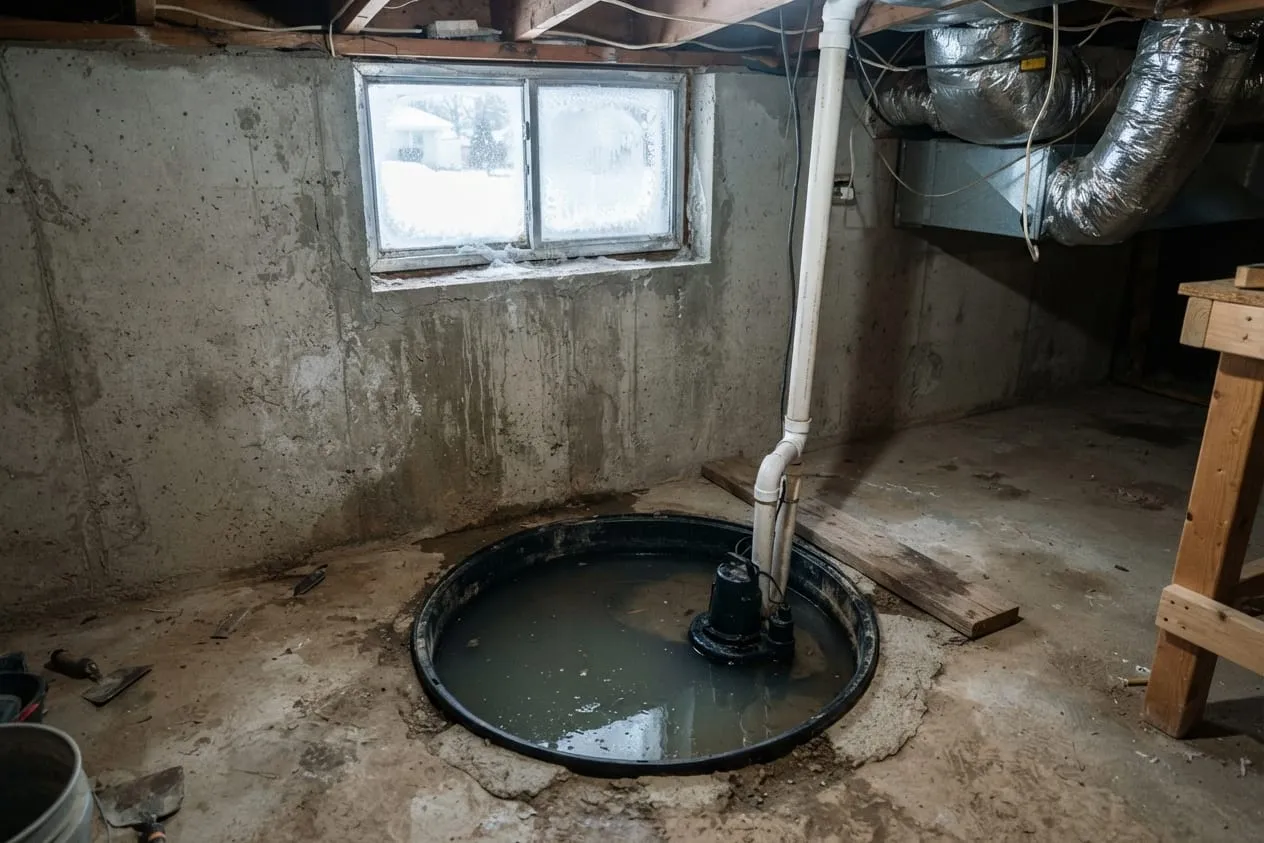
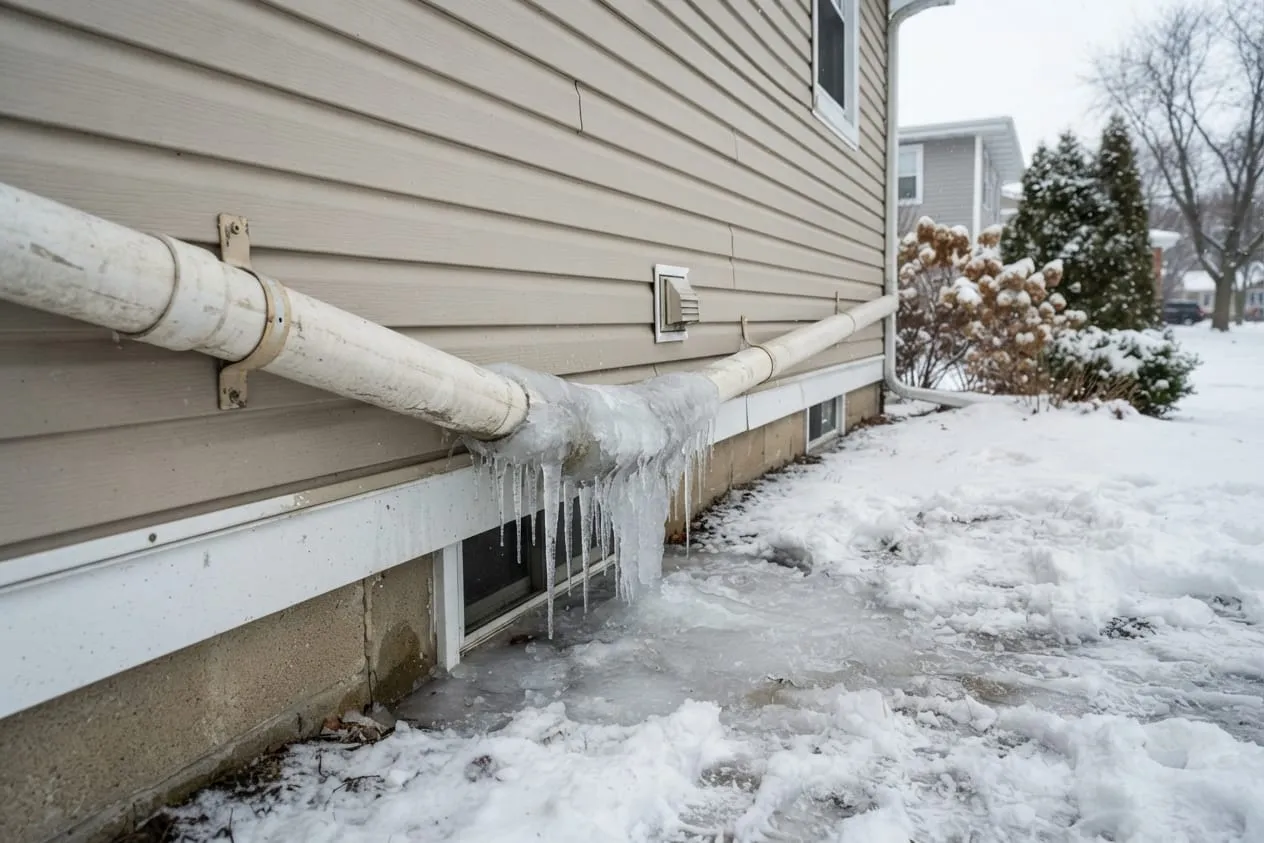
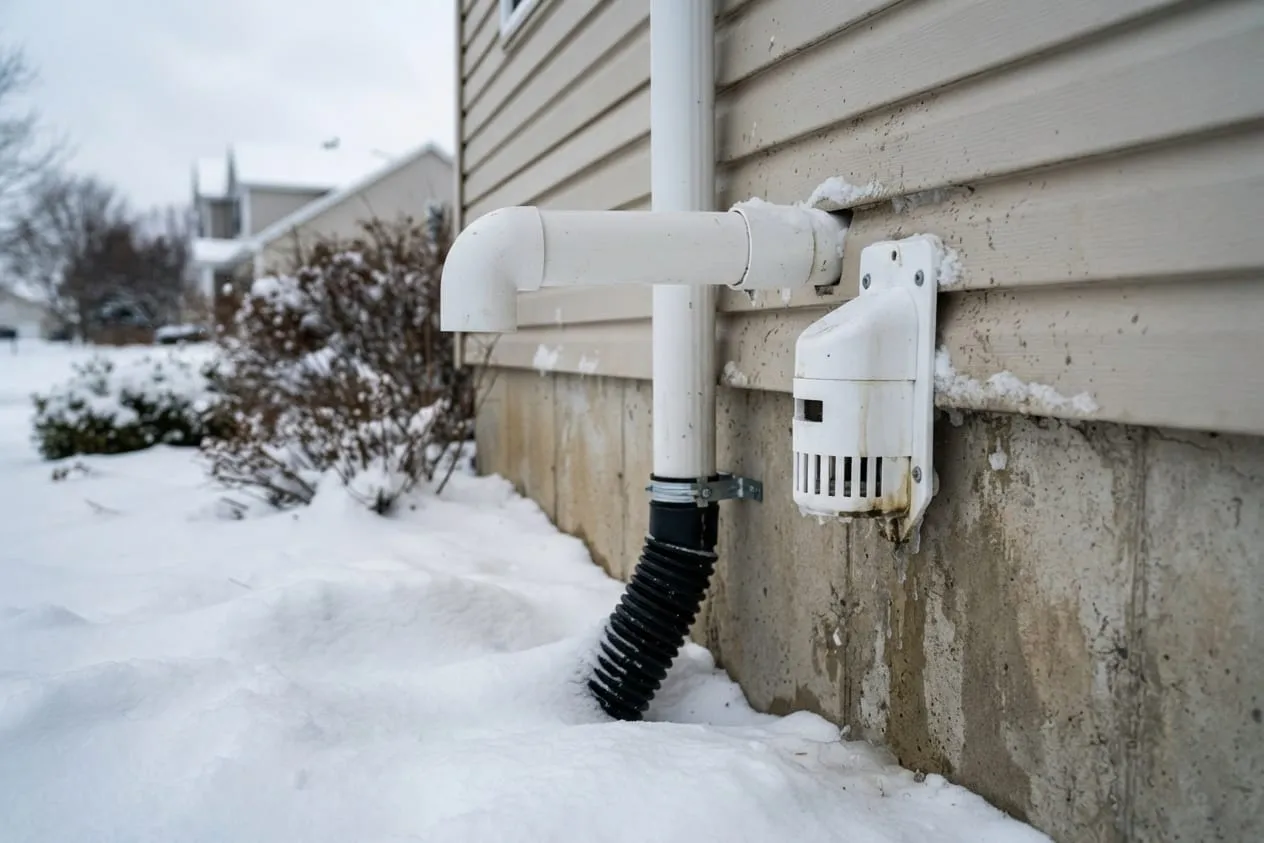
The pump starts, runs, and the water in the pit barely moves. Outside, the end of the line is capped with ice, or nothing comes out at all. If the line has a relief fitting near the wall, water spilling out of it onto the snow means the pipe beyond it is blocked, and the fitting is doing its job.
The City of Naperville's sump fact sheet says most pumps won't burn up pushing against a frozen line, since almost all have built-in thermal protection, but they can overheat, and a night of overheating and cooling off is hard on a motor.
- If the pump runs without the pit dropping and the floor around the outlet is dry, unplug it so it isn't straining against the ice. The pit keeps filling, so call right away.
- Keep away from the pit and outlet if water is already on the floor near them.
- No torch or heat gun on the pipe. Most discharge lines are PVC, and an open flame near the house is a worse problem than ice.
- Call and say where the line leaves the house and where it ends. That's where your plumber starts.
Why the same line freezes every winter
January nights here average a low of 16°F at NOAA's Aurora station, and December and February aren't far behind. The pump only fills the line in bursts, so whatever water stays in the pipe between cycles sits still long enough to freeze. The line usually ices up in the same few places:
- A sag or a flat stretch where water collects instead of draining out after each cycle.
- A flexible extension hose laid across the lawn. It flattens under snow and holds water along its whole length.
- A shallow buried pipe. Naperville sets deck footings 42 inches below grade. A discharge line buried a foot down is far shallower than that, and water left standing in it can freeze.
- The outlet itself, where the stream meets cold air and snow and builds an ice cap that grows back into the pipe.
Pointing the line at a driveway or sidewalk to get it away from the house trades one problem for another. Naperville's Code Enforcement answer to "Can I direct my sump pump discharge to the sidewalk or street?" is "No," and the City's snow page gives the reason: freezing water.
Fixes that hold through a Naperville winter
| What freezes | Why | The fix |
|---|---|---|
| Low spot in the line | Water pools and sits between cycles | Re-pitch the line so it drains out after every cycle |
| Hose across the lawn | Holds water, flattens under snow | Rigid pipe with a steady fall to the outlet |
| Shallow buried run | Inside the frost layer | Deeper burial, or a route that drains back and out above grade |
| Everything past the wall | Any blockage backs up into the pit | A freeze-relief fitting near the house so water has a way out |
| Outlet at the yard's edge | Ice cap at the end of the pipe | Outlet on open ground that slopes away, or a tie-in to a yard storm sewer |
A storm sewer tie-in is the cleanest winter answer where there's a City storm sewer in the yard, and it needs a City storm sewer connection permit. Everywhere else, the City's sump fact sheet asks for discharge at least 5 to 10 feet from the house, downhill, never onto a neighbor's lot. The sump pit and discharge line page covers how a new line is laid out from the start.
What the winter visit checks
Your plumber starts outside, where the line comes through the rim joist, and follows it to the end looking for sags, joints and the ice plug. Inside, the check valve and the pump get tested once water is moving again, because a pump that spent a night tripping its thermal cutoff may need replacing along with the line. You'll have a written price for the reroute before the work starts, and the job is finished when the pump empties the pit and the line drains dry after the cycle.
If the pump itself is the problem, the sump pump repair page covers that side.