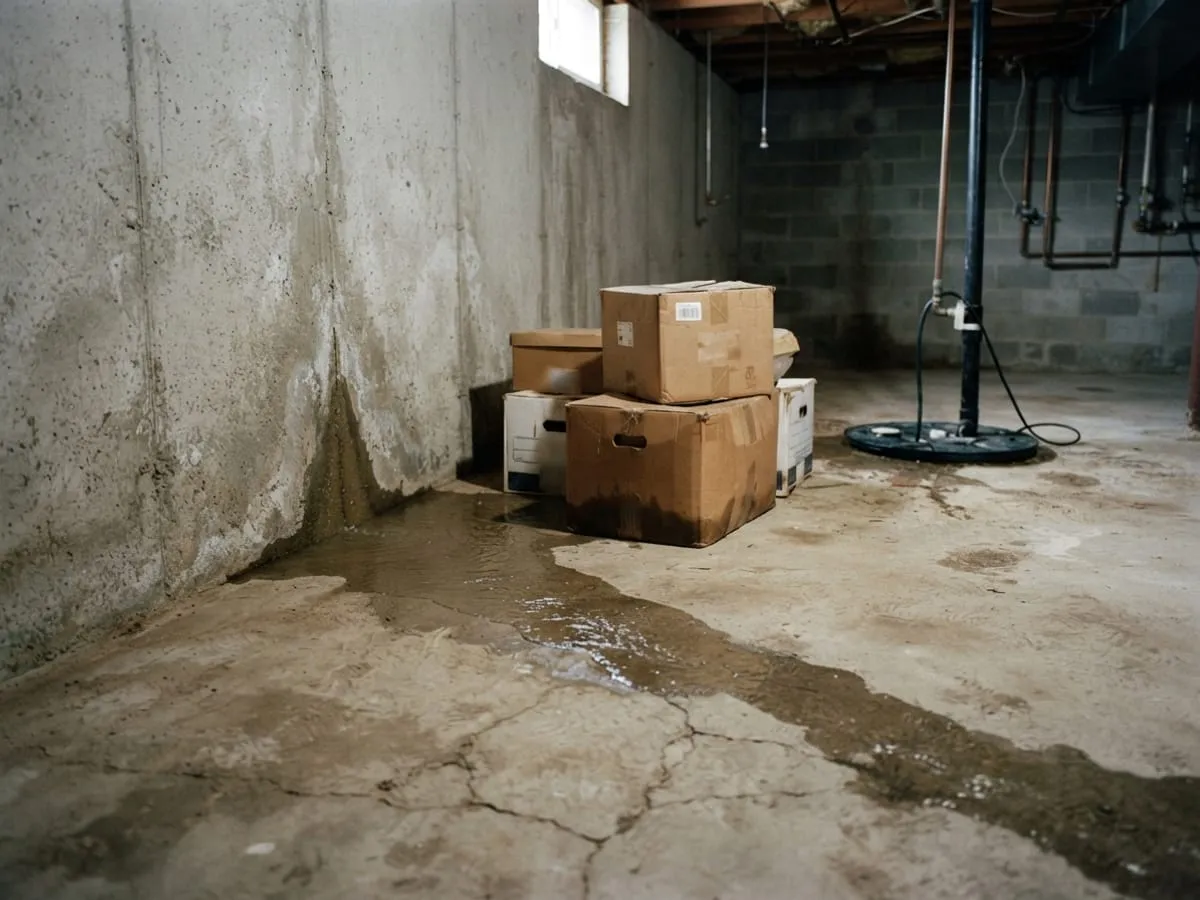
A Naperville basement with a working sump pump floods for one of five reasons. More water reached the pit than the pump could lift. Water came in above the drain tile, at a window well or a crack. The discharge ran back toward the house. The pump or its power quit mid-storm. Or sewer water came up the floor drain, which a sump can't stop.
Pump running all night, pit still rising
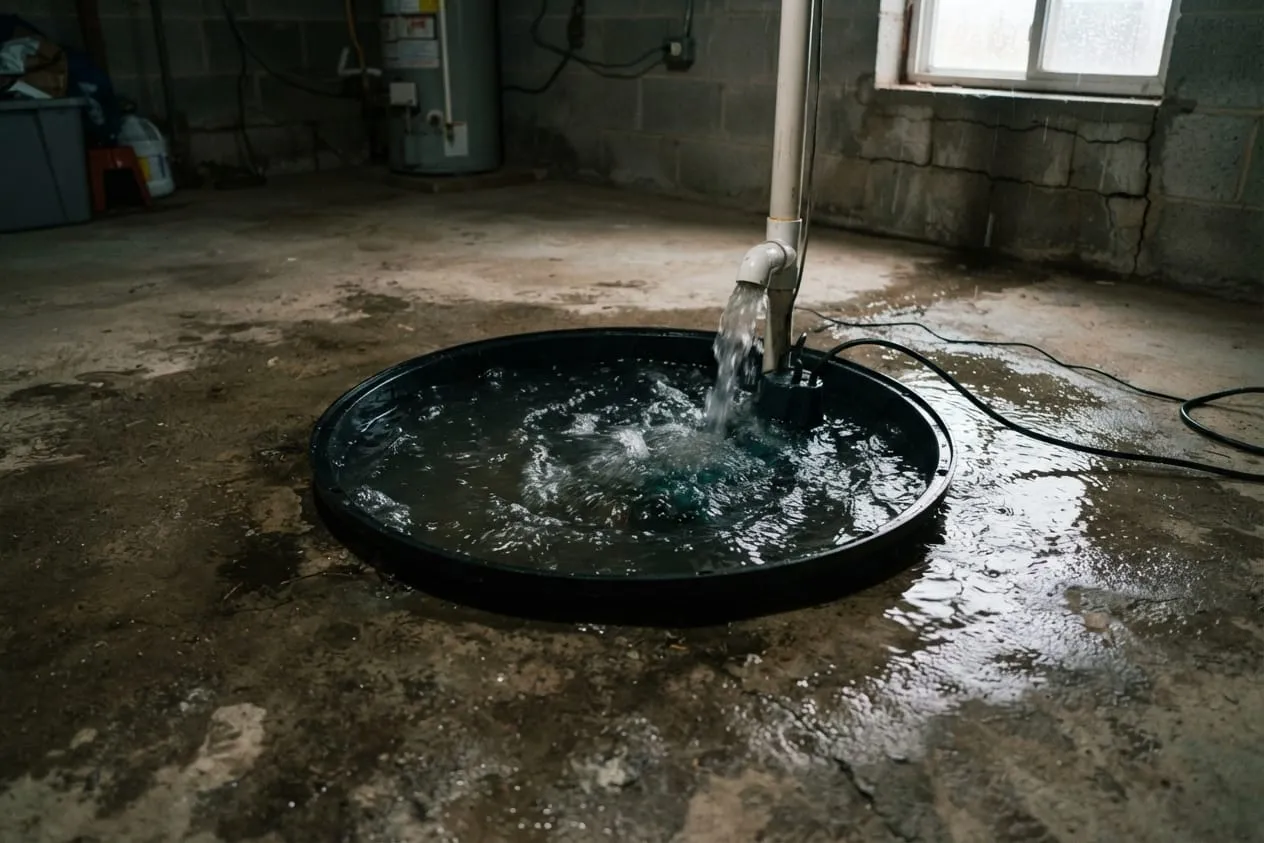
Drain tile around the footing can feed the pit faster than the pump lifts water up and out of the house. The level creeps toward the rim with the motor running nonstop.
Storms here can do that. The April 2013 storm put 7.34 inches on the National Weather Service gauge northwest of downtown Naperville in 48 hours. In October 2017 a gauge east-southeast of downtown logged 7.98 inches over two days, and on May 17, 2020, the Weather Service logged several feet of water on Naper Boulevard near Bailey Road. Averages run high too: NOAA's Aurora station, about 8 miles west, averages 4.86 inches in May and 4.50 in June.
The City's own sump fact sheet describes a pit about 2 feet across that holds roughly 15 to 25 gallons between pumping cycles. In a storm like 2013, a small pit refills almost as soon as it's emptied. A pump that keeps up in a normal May can fall short here for a few reasons:
- It's undersized for how high it has to lift the water to reach the discharge line, so its real output is well under the number on the box.
- The impeller is worn or the intake screen is half blocked with silt.
- The pit is too small, so the pump spends its time starting and stopping instead of moving water.
The fixes are a properly sized replacement pump, a larger basin, or a second pump in the same pit that switches on higher up. A backup pump set that way helps in a downpour even with the power on.
Water at the wall, the window well or a crack
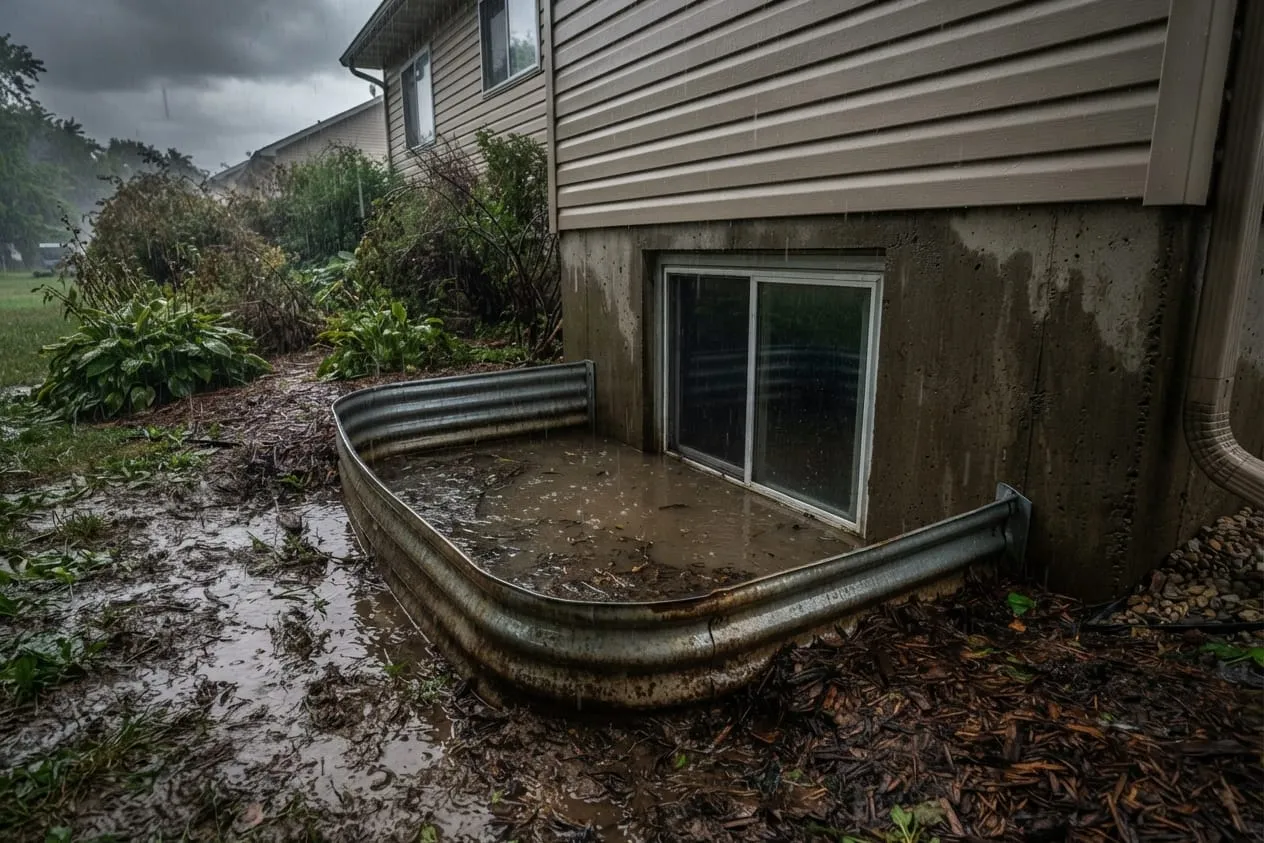
If the water showed up along one wall, under a window or at a crack in the floor, while the pit stayed fairly low, it never reached the drain tile. Window wells that fill and spill over, downspouts emptying right at the foundation, and soil that slopes toward the house all put water against the wall above the footing. The City's drainage fact sheet suggests the ground should drop about 6 inches in the first 10 feet away from the foundation.
Tell us where the water appeared first when you call. Your plumber can tell from the pit and the pump whether the sump system was overwhelmed or simply bypassed, and that changes what's worth fixing.
Discharge water coming back around
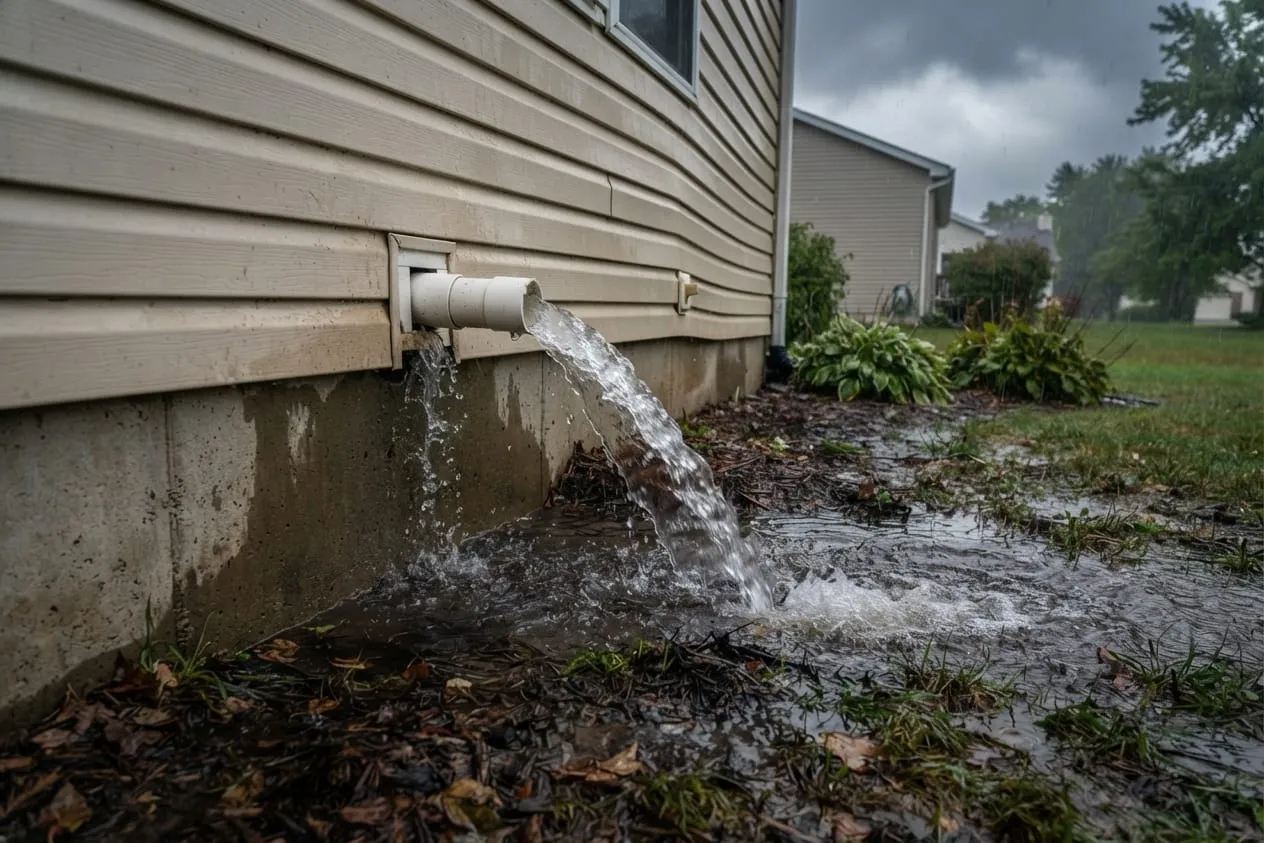
A discharge line that ends a few feet from the house can send the same water in a loop: out of the pipe, back down through the soil, into the drain tile and into the pit again. The pump runs harder and the yard by that corner stays soggy. The City's fact sheet asks for discharge at least 5 to 10 feet out, preferably 10, aimed downhill. On the visit, the line gets followed to where it actually ends, not just to where it leaves the wall.
A check valve that let go
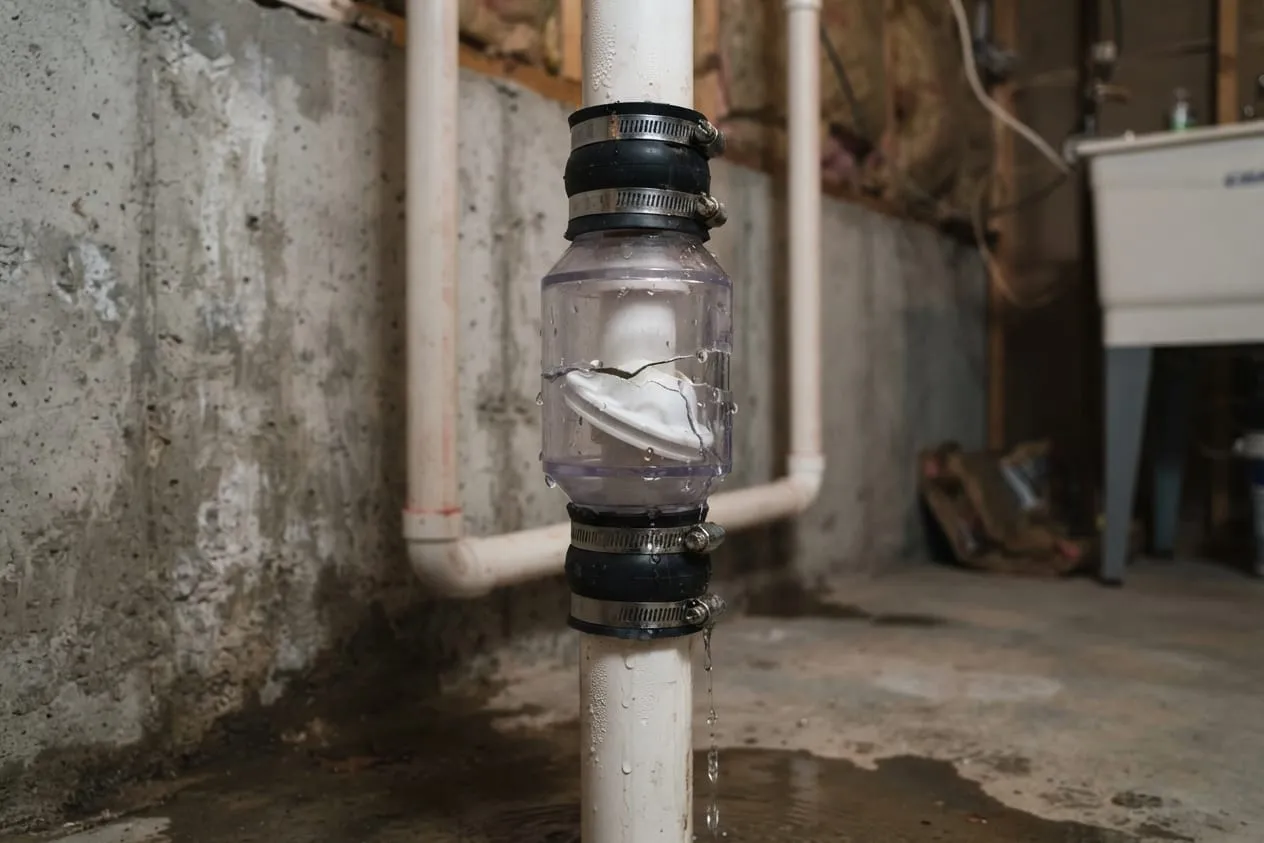
The check valve keeps the water in the discharge line from falling back into the pit when the pump stops. When it sticks open or its flapper cracks, a good part of every cycle goes back down the riser. The pump short-cycles in dry weather and loses ground in a storm. It's an inexpensive part, and checking it is part of every sump pump repair visit.
The pump or its power quit mid-storm
A float that hung up, a motor that burned out after years of hard cycling, or a GFCI outlet that tripped will stop a pump right when it's needed. Inside Naperville city limits, outages averaged 15 minutes in 2025, so a backup there mostly covers a main pump that fails with the power on. Either way, the answer is a second pump that doesn't depend on the first one: see battery and water-powered backup pumps.
Gray water up the floor drain means the sewer, not the sump
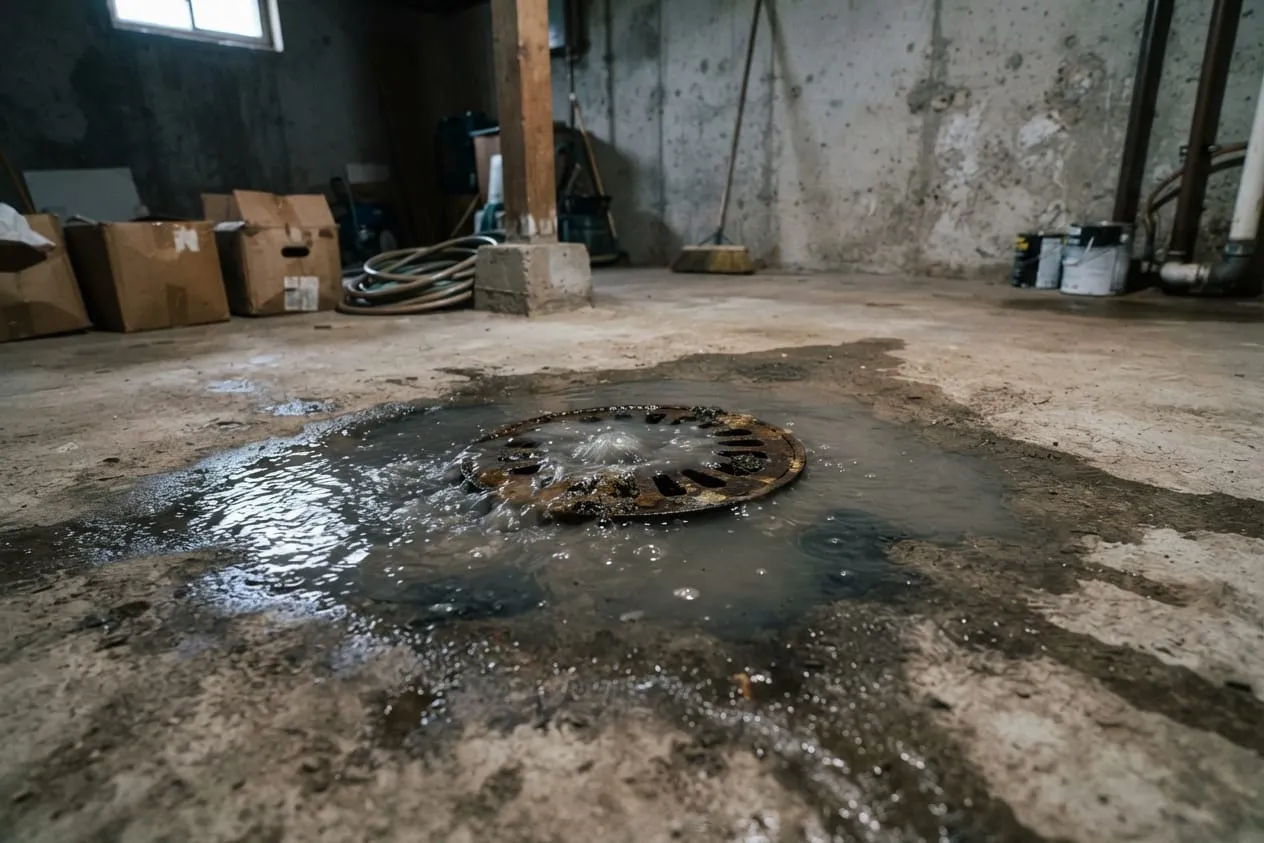
Water that rises through the basement floor drain, sometimes with a sewer smell, is coming back from the sanitary sewer. In an intense storm the sanitary system can fill beyond capacity: the City counted 182 sanitary sewer overflows in 2013, the year of the April storm, and none at all in most years since. When that happens, the lowest opening in your house is where it comes out. A sump pump has no connection to that drain and can't stop it.
The fixes are on the sewer side:
- An overhead sewer. Basement fixtures drain into a sealed pit and get pumped up to a sewer line that leaves the house high on the wall, so nothing below that line is open to the street sewer. The City's design standards call for overhead sewers in new construction, major additions and basement remodels. The ejector pump page covers the pump that does the lifting.
- A backflow device on the sewer line, which closes when sewage tries to come back in.
- Footing drains moved off the sewer. In some older houses the drain tile runs to the sanitary line, adding groundwater to a sewer that's already full. Footing drain reroutes send it to a sump instead.
Where the water showed up, and where to look
| What you found | Likely cause | What fixes it |
|---|---|---|
| Pit over the rim, pump running | Pump can't keep up, or the check valve is leaking back | Larger pump or basin, second pump, new check valve |
| Pit over the rim, pump silent | Power, float or motor failure | Repair or replacement, plus a backup pump |
| Water along one wall, pit low | Water entering above the drain tile | Find the entry point; discharge and downspouts moved away |
| Soggy corner, pump cycling hard | Discharge ending too close to the house | Longer discharge line run downhill |
| Gray water at the floor drain | Sanitary sewer backing up | Overhead sewer, backflow device, footing drains off the sewer |
Mention everything you saw, so the visit covers each one.